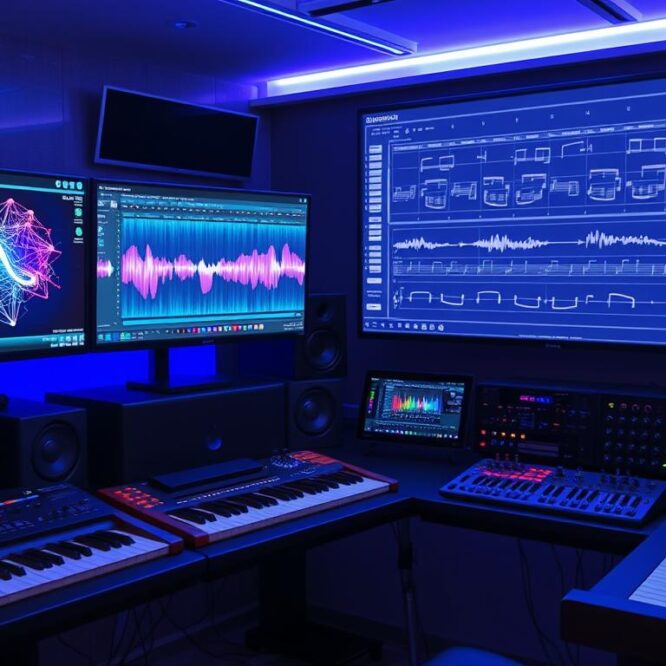
Artificial intelligence is revolutionizing the music industry in unprecedented ways. As we move through 2025, AI tools have evolved from experimental novelties to essential components in modern music production workflows. Whether you’re a seasoned producer or just starting your musical journey, understanding how to harness AI technology can dramatically enhance your creative process, streamline technical tasks, and open new sonic possibilities.
In this comprehensive guide, we’ll explore how AI is transforming every aspect of music creation—from composition and sound design to mixing and mastering. We’ll examine the most powerful AI music tools available today, discuss ethical considerations, and provide practical tips for integrating these technologies into your production workflow without sacrificing your artistic identity.
How AI is Revolutionizing Music Production in 2025
The integration of artificial intelligence into music production has fundamentally changed how artists create, refine, and distribute their work. Unlike traditional production methods that rely solely on human input, AI-powered systems can analyze vast datasets of existing music, identify patterns, and generate new content based on learned parameters.
Composition & Arrangement
AI algorithms can now generate complete musical compositions, suggest chord progressions, create melodies, and even arrange full tracks in specific genres. These tools serve as collaborative partners, offering creative suggestions that artists can refine and develop.
Sound Design & Synthesis
Advanced neural networks can generate entirely new sounds, model vintage synthesizers and equipment, and transform simple audio inputs into complex, evolving textures. This dramatically expands the sonic palette available to modern producers.
Mixing & Mastering
AI-powered mixing and mastering tools can analyze tracks, identify frequency imbalances, apply appropriate processing, and deliver professional-quality results in minutes rather than hours. This democratizes high-quality production for artists at all levels.
The most significant development in 2025’s AI music landscape is the shift from tools that simply automate tasks to systems that genuinely collaborate with human creativity. Today’s AI music generators don’t just follow instructions—they offer suggestions, identify opportunities for improvement, and adapt to your unique style and preferences.
Top AI-Powered Music Production Tools for 2025
After extensive testing and research, we’ve identified the most powerful and user-friendly AI tools that every music producer should consider incorporating into their workflow this year. These solutions range from comprehensive music generation platforms to specialized tools for specific production tasks.
AI Composition and Melody Generation Tools
AIVA (Artificial Intelligence Virtual Artist)
AIVA uses deep learning algorithms to compose emotional soundtrack music for films, games, and commercials. Its neural network has been trained on thousands of classical compositions to create original pieces in various styles.
Pros
- Creates complete orchestral compositions in minutes
- Offers fine control over musical parameters
- Exports to MIDI for further customization
- Provides commercial usage rights
Cons
- Limited genre diversity beyond classical and cinematic
- Advanced features require paid subscription
- Learning curve for deep customization
Pricing: Free plan available; Pro plan at $19/month; Enterprise solutions available for commercial projects
Best for: Film composers, game developers, and artists needing orchestral arrangements
Suno AI
Suno AI has emerged as one of 2025’s most impressive music generation platforms, capable of creating complete songs with vocals, instrumentation, and production from simple text prompts. Its latest model can generate remarkably coherent and emotionally resonant tracks across diverse genres.
Pros
- Creates complete songs with lyrics and vocals
- Impressive genre versatility
- Intuitive text-to-music interface
- High-quality audio output
Cons
- Limited control over specific musical elements
- Daily generation limits on free tier
- Cannot directly edit generated tracks
Pricing: Free tier with 50 credits/day; Premium plan at $8/month with 2,500 credits
Best for: Content creators, songwriters seeking inspiration, and artists exploring new musical directions
MIDI Wizard 2.0
MIDI Wizard has established itself as an essential tool for producers seeking instant melodic inspiration. The 2.0 version introduces advanced genre-specific algorithms that analyze current chart-topping tracks to generate professionally crafted melodies and chord progressions.
Pros
- Over 30,000 genre-specific presets
- Customizable complexity and musical parameters
- Smart Randomize function for unique patterns
- Seamless DAW integration
Cons
- Requires basic music theory knowledge for best results
- Premium pricing compared to alternatives
- Resource-intensive on older systems
Pricing: $197 one-time purchase; frequent promotional discounts available
Best for: Electronic music producers, beat makers, and composers looking to overcome creative blocks
AI Vocal Processing and Voice Synthesis
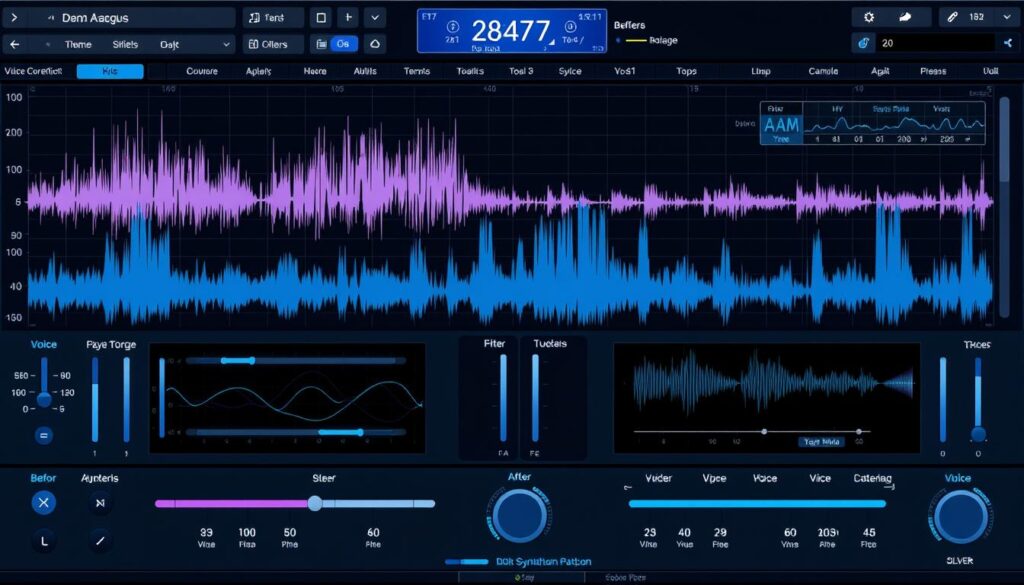
Dreamtonics Synthesizer V
Synthesizer V represents the cutting edge of AI vocal synthesis technology. Using deep neural networks, it can generate remarkably human-like singing voices from text and melody input. The 2025 version introduces enhanced emotional expression and multilingual capabilities.
Pros
- Incredibly realistic vocal synthesis
- Extensive control over vocal expression
- Multiple voice databases available
- Cross-platform compatibility
Cons
- Premium voice databases sold separately
- Steep learning curve for advanced features
- Resource-intensive processing
Pricing: Basic edition at $149; Pro edition at $279; Voice databases from $65-$180 each
Best for: Producers without access to vocalists, electronic music creators, and virtual YouTubers
iZotope VocalSynth Pro
iZotope’s VocalSynth Pro combines traditional vocal processing with AI-powered voice modeling to transform vocal performances. The 2025 edition introduces advanced neural processing that can generate harmonies, create vocal effects, and even transform vocal timbres between different voice types.
Pros
- AI-powered harmony generation
- Voice transformation between different timbres
- Integrated with iZotope ecosystem
- Intuitive visual interface
Cons
- Subscription model may not appeal to all users
- Requires quality vocal recordings for best results
- Some features demand significant processing power
Pricing: $19.99/month as part of iZotope Music Production Suite; perpetual license at $299
Best for: Vocal producers, electronic music artists, and sound designers
AI Mixing and Mastering Solutions
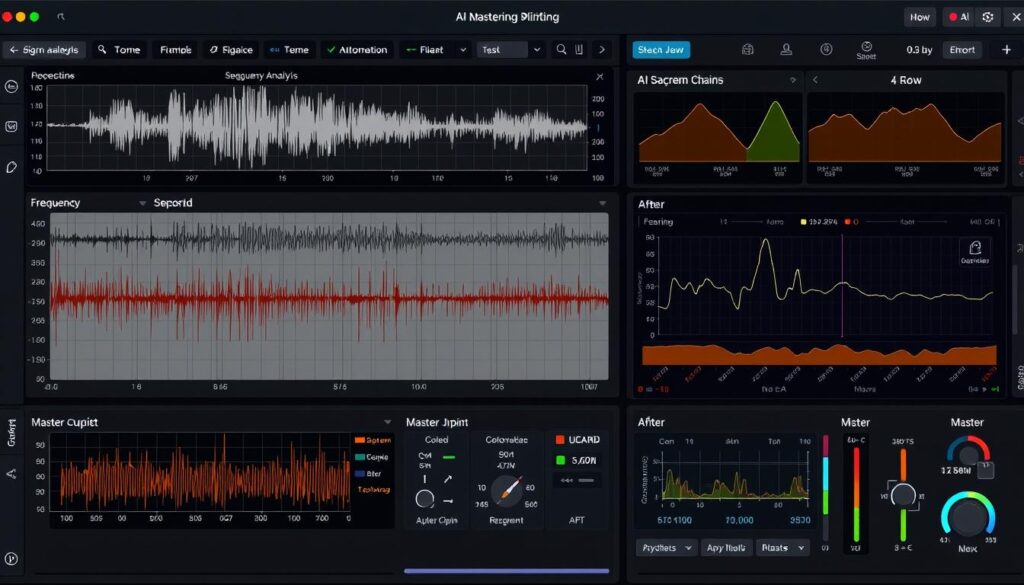
LANDR
LANDR continues to lead the AI mastering space in 2025 with its advanced neural network that analyzes and masters tracks based on genre-specific references. The latest version introduces adaptive mastering that evolves throughout a track to respond to dynamic changes in the music.
Pros
- Fast, consistent mastering results
- Genre-specific mastering profiles
- Cloud-based processing accessible anywhere
- Unlimited revisions with subscription
Cons
- Limited control compared to manual mastering
- Subscription model for full features
- Results may vary depending on input material
Pricing: Basic plan at $9.99/month; Advanced plan at $19.99/month; Pro plan at $39.99/month
Best for: Independent artists, producers working on multiple projects, and creators on tight deadlines
iZotope RX 10
While primarily known as an audio restoration tool, RX 10’s AI capabilities have made it an essential part of the mixing and mastering process. Its neural network can identify and fix issues that would be nearly impossible to address manually, from complex noise removal to instrument separation.
Pros
- Industry-leading audio repair capabilities
- AI-powered stem separation
- Spectral editing with machine learning assistance
- Batch processing for multiple files
Cons
- Significant learning curve
- Premium pricing
- Resource-intensive processing
Pricing: Standard edition at $399; Advanced edition at $1,199; Post Production Suite at $1,999
Best for: Professional audio engineers, post-production specialists, and mastering engineers
AI Sound Design and Sample Management
Atlas by Algonaut
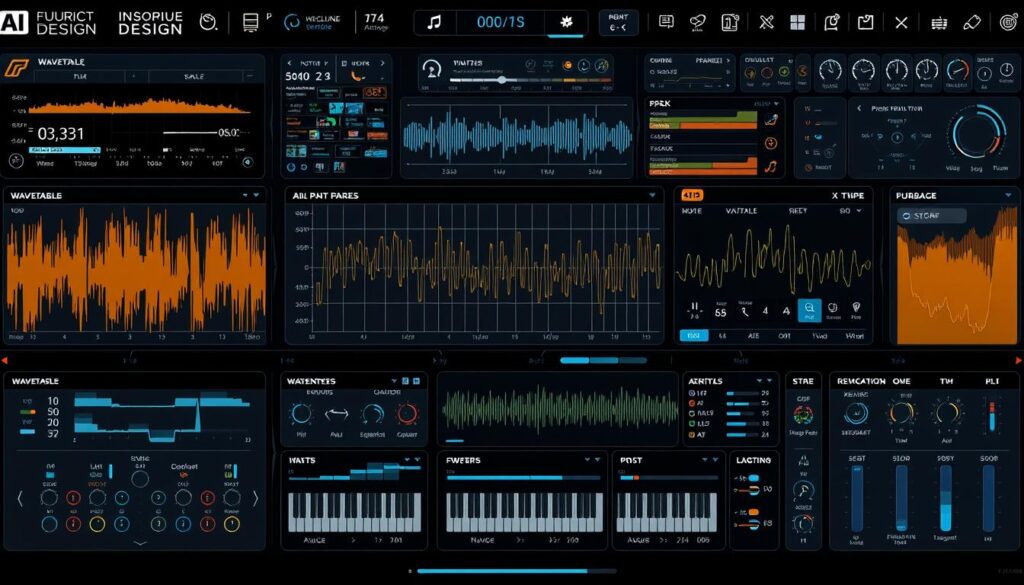
Atlas revolutionizes sample management by using AI to analyze and organize your sample library. The 2025 version introduces enhanced pattern recognition that can identify similar sounds across different sample packs and suggest creative combinations based on your project’s context.
Pros
- AI-powered sample organization
- Intelligent pattern creation
- Visual sample browsing interface
- DAW integration
Cons
- Initial analysis can be time-consuming
- Works best with larger sample libraries
- Limited editing capabilities
Pricing: $99 one-time purchase; free updates for current version
Best for: Sample-based producers, beat makers, and electronic music artists
Magenta Studio
Developed by Google’s Magenta team, this collection of music plugins leverages machine learning to assist with creative music-making. The 2025 update introduces more sophisticated generative models and tighter integration with popular DAWs.
Pros
- Open-source technology
- Multiple creative tools in one package
- Ableton Live integration
- Completely free
Cons
- Less polished interface than commercial alternatives
- Limited support options
- Requires technical knowledge for advanced use
Pricing: Free and open-source
Best for: Experimental musicians, electronic producers, and those interested in AI music research
Soundraw
Soundraw offers AI-generated royalty-free music for content creators. Unlike many competitors, it provides extensive customization options, allowing users to specify genre, mood, length, and instruments before generating complete tracks.
Pros
- Highly customizable music generation
- Commercial usage rights included
- No technical knowledge required
- High-quality audio output
Cons
- Limited download options on free plan
- Cannot export stems on basic tiers
- Less suitable for professional music production
Pricing: Free plan available; Creator plan at $16.99/month; Pro plan at $39.99/month
Best for: Content creators, filmmakers, and marketers needing custom background music
Ethical Considerations and Future Trends
Navigating Copyright and Originality
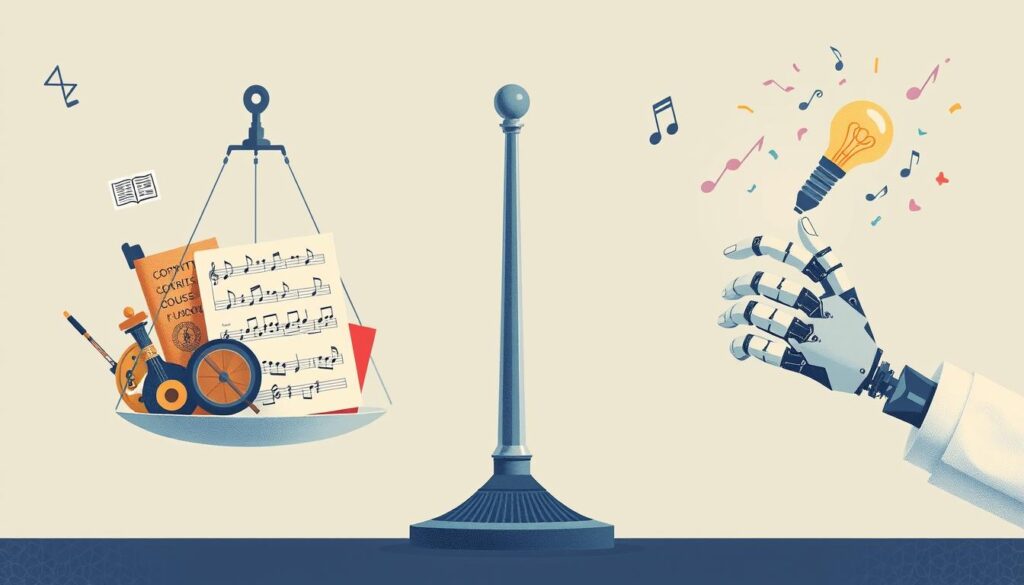
As AI music tools become more sophisticated, the line between human and machine creativity continues to blur, raising important questions about copyright, ownership, and artistic authenticity. When an AI system trained on existing music creates a new composition, who owns the rights to that creation? The artist using the tool, the AI developers, or is it a derivative work of the training data?
“The most successful artists in 2025 aren’t those who use AI to replace their creativity, but those who develop a symbiotic relationship with these tools—knowing when to lead and when to follow the machine’s suggestions.”
Current legal frameworks are still catching up to these technological developments. Most AI music platforms now offer clear licensing terms, but artists should carefully review these agreements before commercially releasing AI-assisted work. Some platforms provide royalty-free licenses, while others may claim partial ownership or require attribution.
Preserving Human Creativity
Perhaps the most significant concern surrounding AI in music production is whether these tools will ultimately diminish human creativity rather than enhance it. Critics worry that over-reliance on AI could lead to homogenized music lacking the emotional depth and unique perspective that human experience brings.
However, many artists have found that using AI as a collaborative tool actually expands their creative horizons. By handling technical aspects of production or suggesting unexpected musical ideas, AI can free musicians to focus on the emotional and artistic elements that remain uniquely human.
Future Trends in AI Music Production
Personalized Learning
Future AI tools will adapt to your specific production style, learning your preferences and suggesting ideas that align with your unique artistic voice rather than generic recommendations.
Real-time Collaboration
Emerging technologies will enable AI systems to jam with musicians in real-time, responding to live input and creating truly interactive creative partnerships between humans and machines.
Emotional Intelligence
Next-generation AI will better understand the emotional content of music, allowing for more nuanced generation and processing that captures the feeling you want to convey in your tracks.
How to Integrate AI Tools into Your Workflow
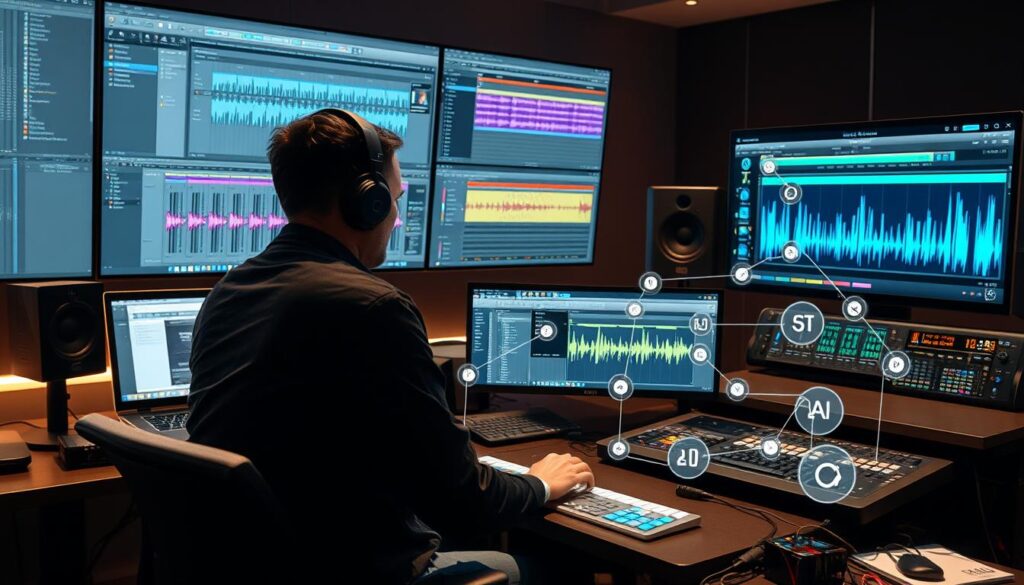
Successfully incorporating AI into your music production process requires a thoughtful approach that enhances rather than replaces your creativity. Here are practical strategies for making these powerful tools work for you:
Start with Clear Creative Direction
Before engaging with AI tools, develop a clear vision for your project. Define the genre, mood, tempo, and key elements you want to include. This gives the AI specific parameters to work within and ensures the generated content aligns with your artistic goals.
Pro Tip: Create a reference playlist of tracks that inspire your current project. Many AI tools can analyze these references to generate more relevant suggestions.
Use AI for Ideation, Not Completion
The most effective approach treats AI as a collaborative partner in the early stages of creation rather than a replacement for the entire creative process. Use AI to generate initial ideas, overcome creative blocks, or explore directions you might not have considered.
Effective AI Integration Techniques:
- Generate multiple AI suggestions and cherry-pick the most interesting elements
- Use AI to create foundational elements, then add your unique touches
- Combine ideas from different AI generations to create something entirely new
- Use AI for technical tasks (like mixing) to focus more on creative aspects
- Train AI on your own work to develop a tool that complements your style
Develop a Hybrid Workflow
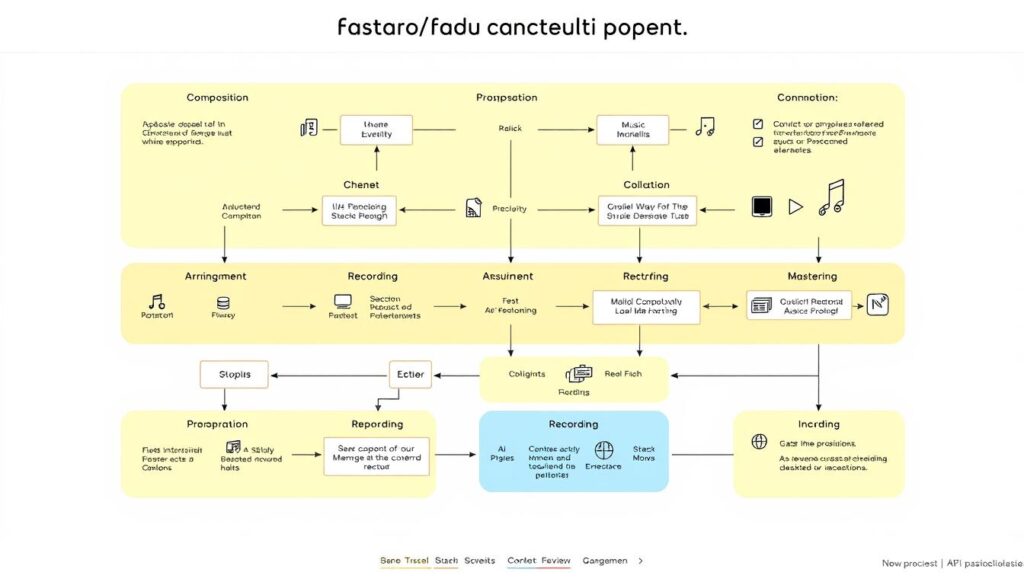
Rather than viewing AI as separate from traditional production methods, develop a workflow that seamlessly integrates both approaches. This might mean using AI for initial composition, traditional techniques for arrangement, and AI again for mixing and mastering.
Sample Hybrid Workflow:
- Use MIDI Wizard to generate chord progressions and melodic ideas
- Manually select and edit the most promising elements
- Record live instruments or vocals to add human expression
- Use Atlas to find complementary samples for texture
- Apply traditional mixing techniques for initial balance
- Utilize LANDR for final mastering and reference checking
Balance Automation and Control:
Most AI music tools offer varying degrees of user control. Experiment with different settings to find the right balance between automation and manual input for your workflow. Start with more controlled settings until you understand how the AI responds to different inputs.
Remember that even fully automated processes can be adjusted afterward. Don’t hesitate to edit, combine, or completely transform AI-generated content to make it truly yours.
Continuous Learning and Experimentation
The field of AI music production is evolving rapidly. Set aside time to explore new tools, techniques, and approaches. Join online communities where producers share their experiences with AI tools and learn from both successes and failures.
Ready to Transform Your Music Production?
Start integrating AI into your workflow today with these powerful tools. Most offer free trials or basic plans so you can experiment before committing.
Conclusion: The Future of Human-AI Collaboration in Music
As we’ve explored throughout this guide, AI in music production represents not a replacement for human creativity but a powerful extension of it. The most successful artists in 2025 are those who have learned to collaborate effectively with these tools—using them to overcome limitations, explore new possibilities, and focus more deeply on the aspects of music creation that remain uniquely human.
The key to thriving in this new landscape is maintaining a balanced perspective. AI tools can generate ideas, handle technical tasks, and even produce complete tracks, but they cannot replace the lived experience, emotional depth, and unique perspective that human artists bring to their work. The most compelling music will continue to emerge from the meaningful intersection of human creativity and artificial intelligence.
As these technologies continue to evolve, stay curious, experimental, and intentional about how you incorporate them into your creative process. By thoughtfully integrating AI tools into your workflow while preserving your artistic voice, you can harness the full potential of this technological revolution while creating music that remains authentically yours.
Frequently Asked Questions About AI in Music Production
Will AI replace human musicians and producers?
No, AI is best viewed as a collaborative tool rather than a replacement. While AI can generate musical content and handle technical tasks, it lacks the emotional depth, lived experience, and intentionality that human creators bring to music. The most compelling music in 2025 combines human creativity with AI capabilities rather than relying exclusively on either.
Do I need technical expertise to use AI music production tools?
Many modern AI music tools are designed with user-friendly interfaces that require minimal technical knowledge. Tools like Suno AI and Soundraw can be used effectively with no prior experience. More advanced tools like iZotope RX 10 or Synthesizer V offer deeper functionality that benefits from some technical understanding, but most provide extensive tutorials and presets for beginners.
Who owns the rights to music created with AI tools?
Copyright ownership varies depending on the specific AI tool and its terms of service. Some platforms grant users full ownership of generated content, while others may require attribution or limit commercial usage. Always review the licensing terms before commercially releasing music created with AI assistance. The legal landscape is still evolving, so staying informed about current regulations is important.
Can AI-generated music be emotionally impactful?
Yes, AI-generated music can evoke emotional responses, especially as the technology continues to advance. However, the most emotionally resonant AI music typically involves human curation, direction, and refinement. By providing clear emotional intent through prompts and selectively editing AI output, artists can create deeply moving pieces that leverage both technological capabilities and human emotional intelligence.