Electronic music stands at a fascinating crossroads as we approach 2026. The genre that once existed on the fringes of mainstream culture has evolved into a dominant force shaping global music trends. Technological advancements, shifting audience preferences, and innovative production techniques are converging to create an unprecedented era of sonic exploration. This comprehensive analysis examines how the landscape of electro music will transform by 2026, offering insights for artists, producers, listeners, and industry professionals navigating this rapidly evolving ecosystem.
Emerging Trends in Electro Music Production and Consumption
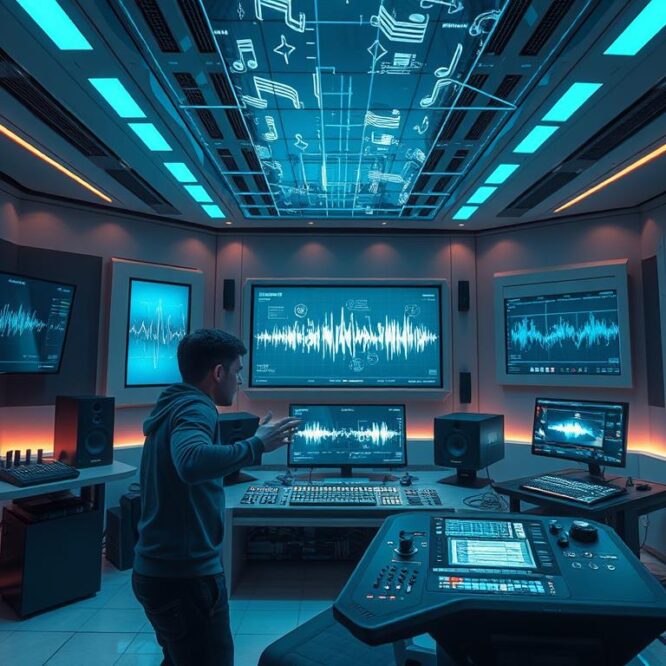
Next-generation production environments will blend physical and digital interfaces by 2026
By 2026, electro music production will undergo significant transformation as artists embrace hybrid creation methods. The boundary between traditional production and AI-assisted composition will blur, with producers leveraging intelligent algorithms to generate unique sound palettes while maintaining creative control. This shift represents not just a technological evolution but a fundamental reimagining of the creative process.
Hybrid Production Approaches
The studio of 2026 will feature seamless integration between analog hardware, digital software, and AI assistants. Producers will increasingly adopt workflow models that combine the warmth of vintage equipment with cutting-edge digital processing. This fusion approach will become the standard rather than the exception, creating distinctive sonic signatures that define the era.
Consumption Patterns Shift
Listeners will gravitate toward more immersive and interactive experiences. Passive consumption will give way to participatory engagement, with fans directly influencing live performances through real-time feedback systems. Streaming platforms will evolve to offer spatial audio as standard, transforming how audiences experience electronic music in both personal and communal settings.
Stay Ahead of the Curve
Join our community of forward-thinking electronic music enthusiasts and receive monthly insights on emerging production techniques and consumption trends.
Technological Advancements Reshaping Music Creation
AI Collaboration Tools
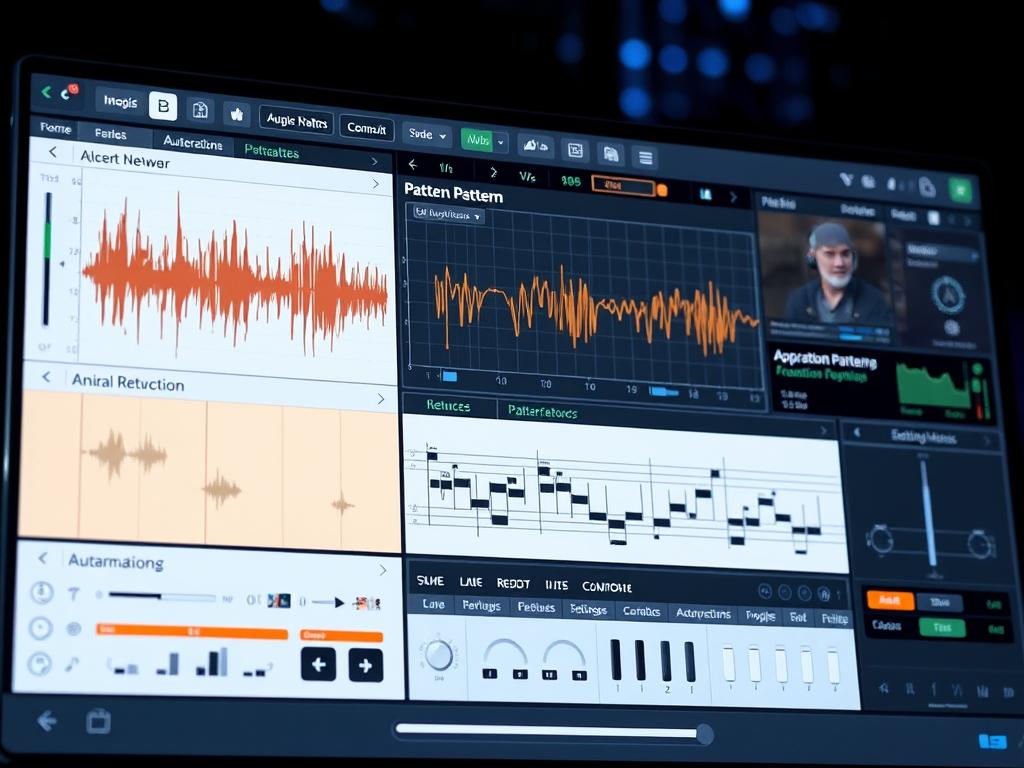
By 2026, artificial intelligence will evolve from basic assistive tools to sophisticated collaborative partners. Advanced neural networks will analyze vast musical datasets to suggest compositional directions while preserving the artist’s unique voice. These systems will function less as automated creators and more as intelligent collaborators, offering unexpected perspectives that expand creative possibilities.
Virtual Reality Production Environments
Virtual reality will transform from novelty to necessity in electronic music production. Immersive studio environments will allow producers to physically interact with sound in three-dimensional space, manipulating audio elements through intuitive gestural controls. These virtual workspaces will enable unprecedented spatial composition techniques, fundamentally changing how electronic music is constructed and experienced.
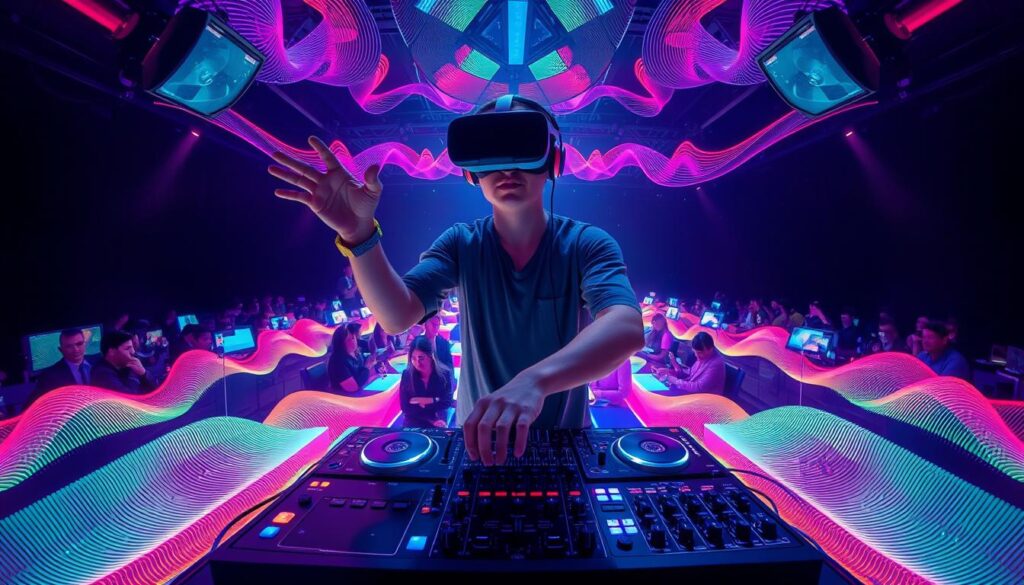
VR performances will allow artists to create multi-dimensional sonic experiences
Blockchain Integration and Decentralized Creation
Blockchain technology will move beyond basic NFTs to enable truly decentralized music creation and distribution. Smart contracts will automate royalty payments in real-time, while decentralized autonomous organizations (DAOs) will fund innovative projects outside traditional label structures. This technological infrastructure will support new economic models that better reward creativity and experimentation.
| Technology | Current State (2025) | Projected Evolution (2026) | Impact on Electro Music |
| AI Composition | Basic pattern generation | Contextual understanding of musical intent | More nuanced and emotionally resonant compositions |
| Virtual Reality | Experimental interfaces | Standardized spatial production tools | Three-dimensional sound design becomes mainstream |
| Blockchain | NFT collectibles | Integrated royalty and collaboration systems | New economic models for independent artists |
| Biofeedback Systems | Limited consumer applications | Widespread integration with production software | Emotionally responsive compositions and performances |
Evolving Audience Preferences and Listening Habits
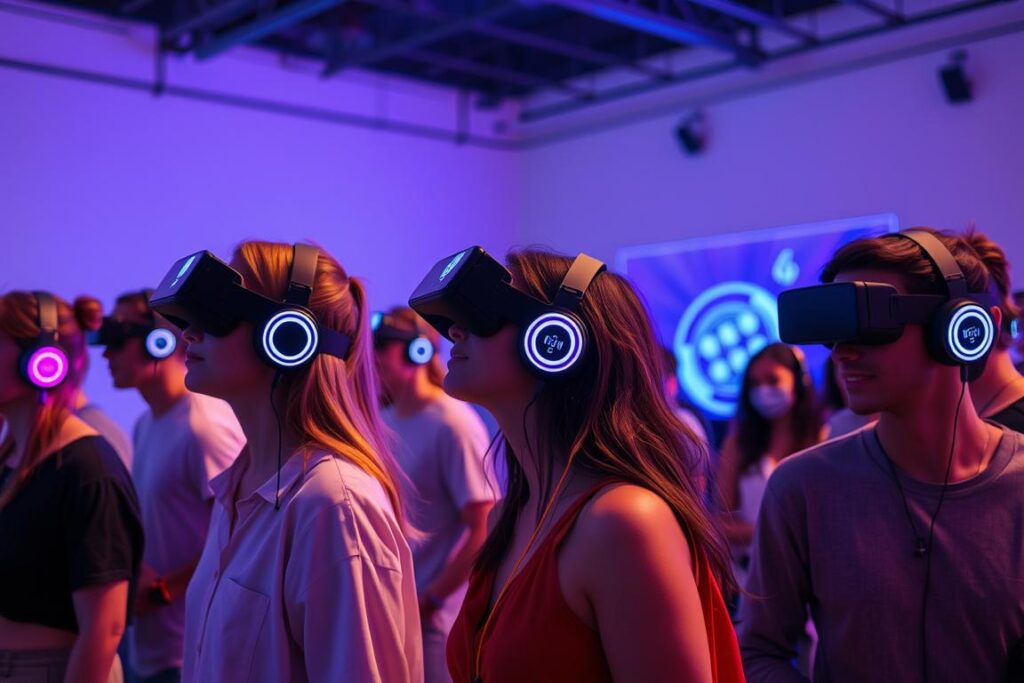
The electronic music audience of 2026 will seek deeper connections with music beyond passive consumption. Immersive experiences, community engagement, and personalized content will define how listeners interact with electro music. This evolution reflects broader cultural shifts toward meaningful digital experiences that blend entertainment with personal identity and social connection.
From Passive Listening to Active Participation
By 2026, the line between creator and consumer will continue to blur. Audiences will expect opportunities to remix, reinterpret, and interact with music through official platforms. Artists who embrace this participatory model will build stronger communities and discover new creative directions through fan collaboration. This shift represents a fundamental reimagining of the artist-audience relationship.
Context-Aware Listening Experiences
Smart systems will deliver electronic music tailored to specific environments, activities, and emotional states. Biometric feedback will allow music to adapt in real-time to listeners’ physiological responses, creating deeply personalized experiences. This contextual awareness will transform how electronic music functions in daily life, from productivity enhancement to emotional regulation.
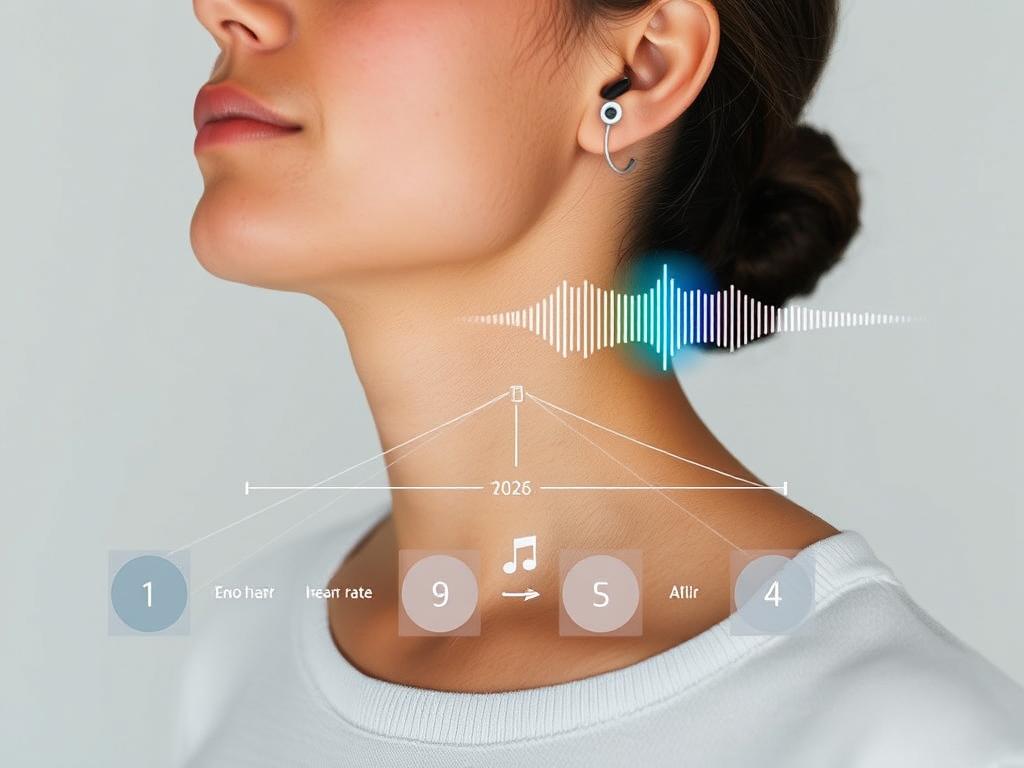
Biometric feedback systems will create personalized listening experiences that adapt to emotional states
“The future of electronic music isn’t just about what we hear—it’s about how we interact with sound. By 2026, the most successful artists will be those who design experiences rather than just tracks.”
Subgenre Evolution and Cross-Pollination
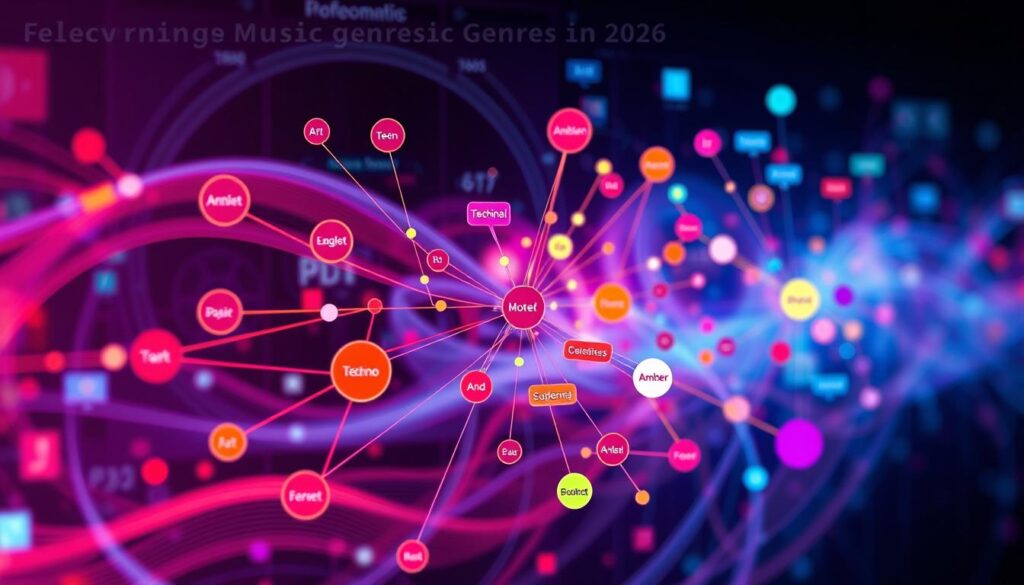
The rigid boundaries between electronic music subgenres will continue to dissolve by 2026, giving rise to hybrid forms that defy traditional categorization. This cross-pollination will accelerate as global influences merge with established electronic traditions, creating rich new sonic territories for exploration.
Emerging Hybrid Genres
Several distinctive hybrid genres will gain prominence by 2026, including:
Bioacoustic Techno
Merging environmental field recordings with techno structures, this genre will incorporate AI-processed natural sounds and biofeedback elements to create immersive rhythmic experiences that connect listeners to both technology and nature.
Quantum House
Evolving from deep and melodic house traditions, this genre will utilize algorithmic composition techniques inspired by quantum computing principles, featuring probability-based arrangements that create subtly shifting patterns within familiar structures.
Neural Ambient
Building on generative ambient traditions, this genre will employ neural networks trained on both electronic and classical compositions to create evolving soundscapes that respond to listener attention patterns and environmental factors.
Heritage Fusion
This approach will integrate indigenous musical traditions with advanced electronic production, preserving cultural heritage while creating forward-looking sonic experiences that honor both ancestral wisdom and technological innovation.
Global Influences Reshape the Landscape
By 2026, electronic music’s evolution will increasingly be driven by producers outside traditional Western centers. Artists from Africa, Latin America, and Asia will bring distinctive rhythmic traditions and tonal approaches that fundamentally reshape the global electronic sound. This decentralization will accelerate as technology democratizes production capabilities worldwide.
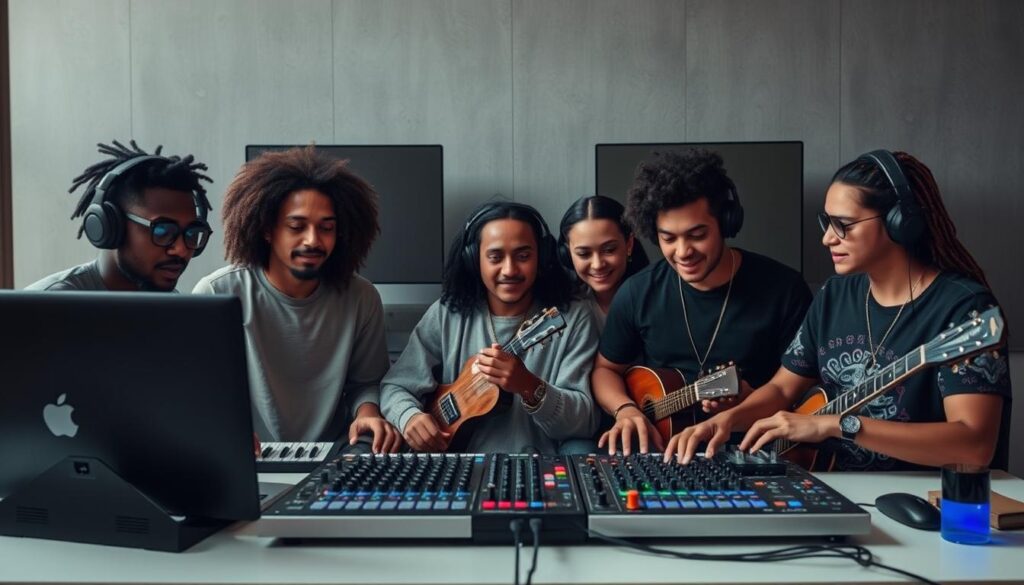
Global collaboration will accelerate the fusion of diverse musical traditions with electronic production
Explore Tomorrow’s Sounds Today
Download our exclusive report on emerging electronic music subgenres and be among the first to discover the sounds that will define 2026.
Streaming Platforms and Social Media Evolution
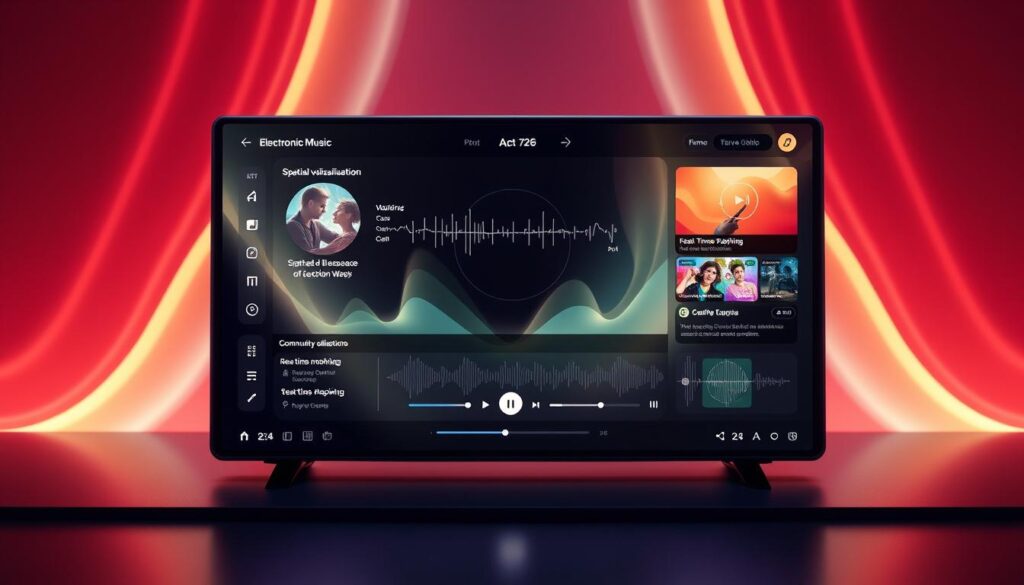
By 2026, streaming platforms will evolve beyond passive content delivery to become interactive ecosystems that foster creation, collaboration, and community. This transformation will fundamentally change how electronic music is discovered, experienced, and monetized, creating new opportunities for artists while challenging established business models.
Spatial Audio Becomes Standard
Immersive audio formats will become the default listening experience rather than a premium option. Streaming platforms will require spatial mixes from artists, driving widespread adoption of three-dimensional production techniques. This shift will particularly benefit electronic music, where spatial movement and sound design are central to the artistic expression.
Algorithmic Curation Evolves
Discovery algorithms will move beyond basic recommendation systems to become sophisticated curation tools that understand musical context, emotional resonance, and cultural significance. These systems will help surface innovative electronic music that might otherwise remain undiscovered, creating more diverse listening experiences while supporting experimental artists.
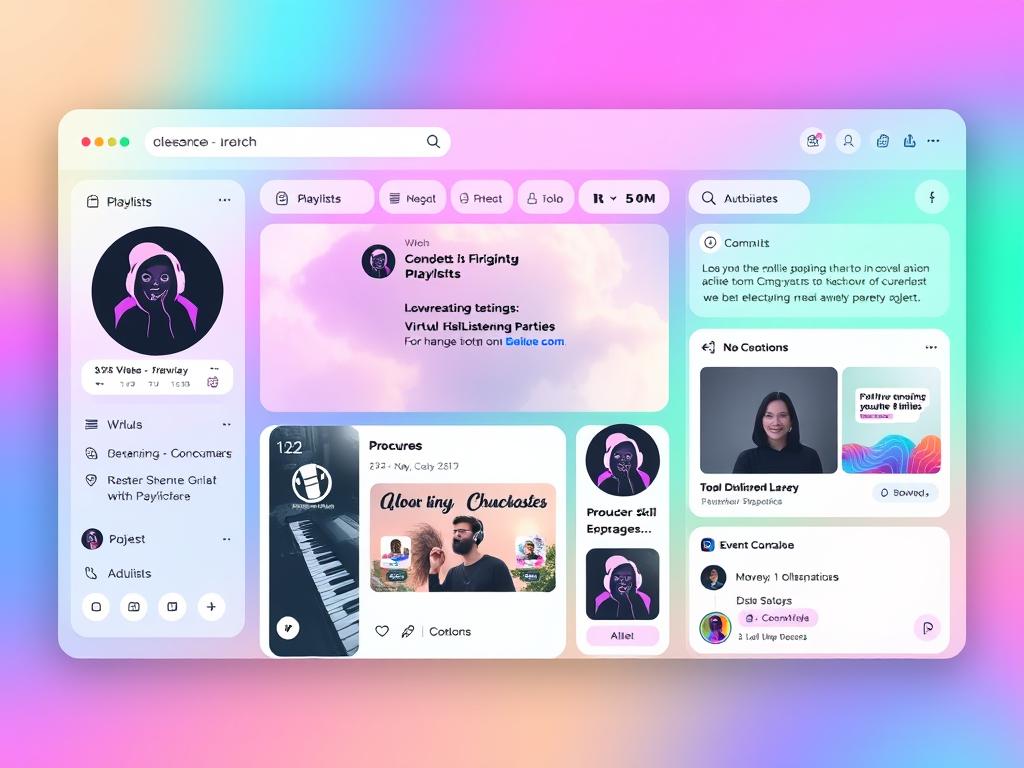
Specialized social platforms will facilitate deeper connections within electronic music communities
Creator-Centric Social Platforms
Social media will fragment into more specialized platforms catering to specific creative communities. Electronic music will benefit from dedicated spaces that integrate production tools, performance capabilities, and community features. These platforms will prioritize meaningful engagement over passive consumption, helping artists build sustainable careers through direct audience relationships.
How will streaming economics change for electronic artists by 2026?
By 2026, we’ll likely see a shift toward multi-tiered monetization models that combine traditional per-stream payments with direct support mechanisms, NFT integration, and experience-based revenue. Artists will increasingly earn from interactive elements, spatial audio premiums, and community participation rather than just passive listening. Blockchain integration will also enable more transparent and immediate royalty distributions, particularly benefiting independent electronic producers.
Will major platforms continue to dominate, or will we see more specialized services?
While major platforms will maintain significant market share, we’ll see increased fragmentation with genre-specific platforms gaining traction. Electronic music, with its technically-savvy audience and community focus, is particularly well-positioned for specialized platforms that offer features tailored to electronic music discovery and appreciation. These niche services will compete on community features and creator tools rather than just catalog size.
The Evolution of Live Performances and Festivals
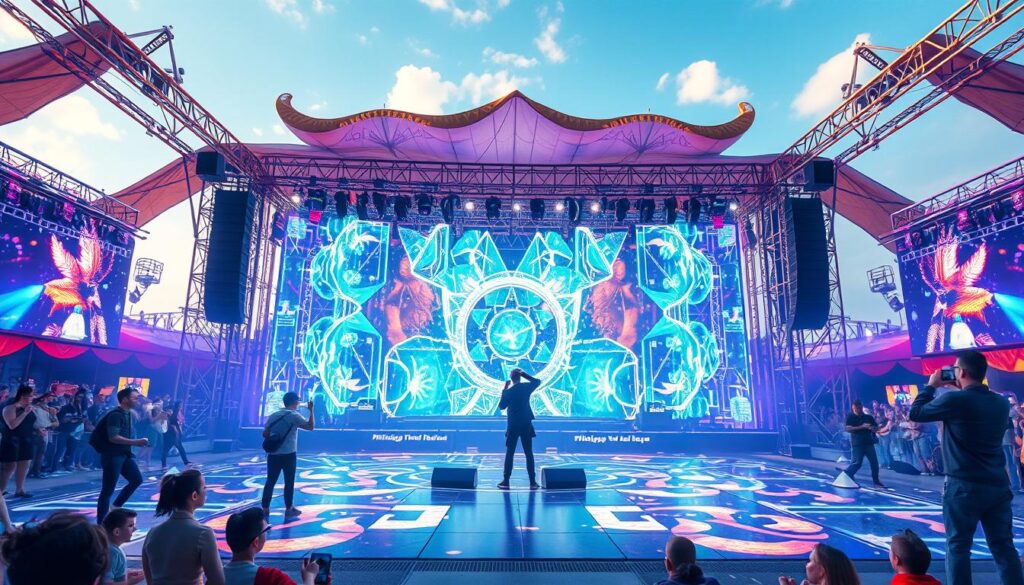
Live electronic music experiences will undergo profound transformation by 2026, blending physical and digital elements to create unprecedented performance formats. The traditional distinction between in-person and virtual attendance will blur as hybrid models become standard, expanding access while creating new artistic possibilities.
Mixed Reality Performance Environments
Artists will embrace mixed reality technologies to create performances that exist simultaneously in physical and digital space. Audiences will experience these shows through lightweight AR glasses that add personalized visual layers to physical environments. This approach will enable more dynamic performances that adapt to specific venues while maintaining consistent artistic vision.
Decentralized Festival Models
The mega-festival model will evolve toward more distributed experiences that span multiple locations connected through technology. These networked events will reduce environmental impact while creating more intimate local experiences that maintain a sense of global connection. Artists will perform across these networks, reaching multiple audiences simultaneously.
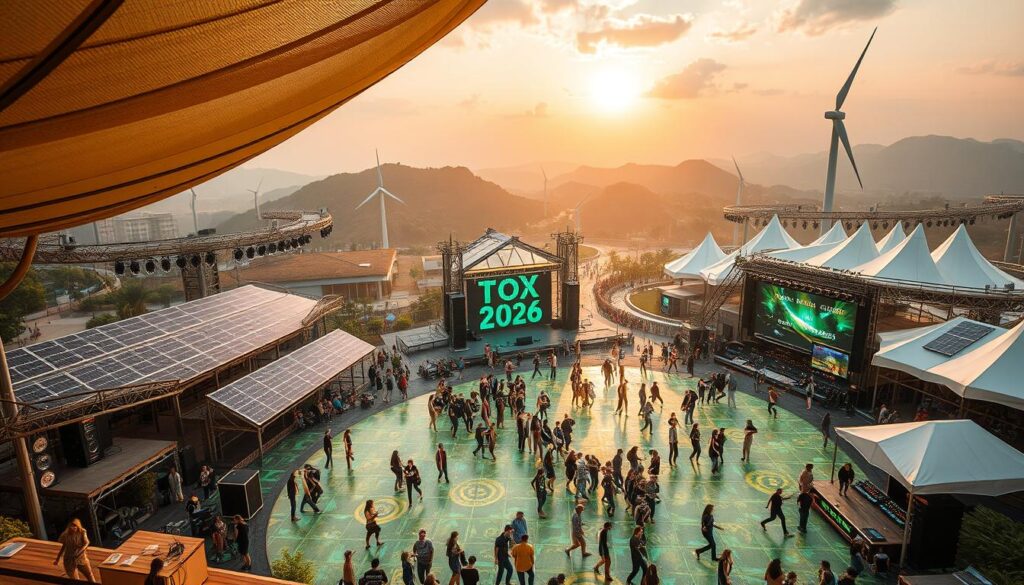
Sustainable festival design will incorporate renewable energy and eco-conscious infrastructure
Participatory Performance Models
The boundary between performer and audience will continue to dissolve as interactive technologies enable greater participation. Crowd-sourced elements will become integral to live electronic sets, with artists incorporating audience contributions in real-time. This collaborative approach will create unique, unrepeatable performances that strengthen community connections.
“The most exciting electronic performances of 2026 won’t be about watching someone on stage—they’ll be about co-creating experiences that blur the lines between artist and audience, physical and digital, personal and communal.”
Sustainability and Ethical Considerations
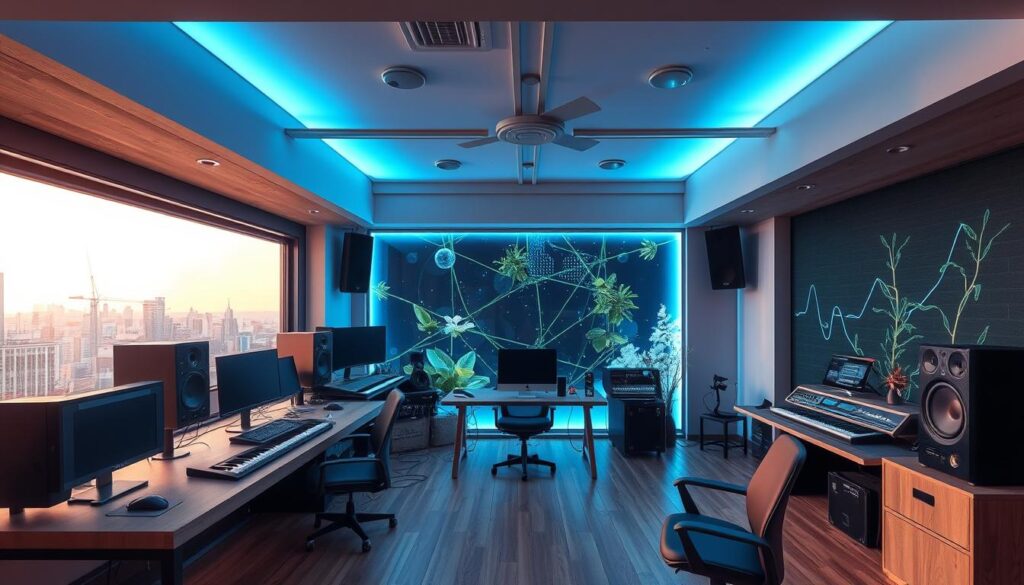
Environmental and ethical considerations will move from peripheral concerns to central principles in the electronic music ecosystem by 2026. Artists, labels, and event producers will increasingly build their identities around sustainable practices, responding to audience demands for responsible approaches to creation and performance.
Low-Carbon Production and Performance
Energy-efficient production techniques and carbon-neutral performance models will become industry standards rather than marketing differentiators. Artists will embrace local performance circuits that reduce travel emissions, while studios will increasingly operate on renewable energy. These practices will influence artistic choices, with sustainability becoming an aesthetic as well as ethical consideration.
Ethical AI and Data Usage
As AI tools become more integrated into electronic music creation, questions of data ethics and algorithmic bias will gain prominence. The industry will develop frameworks for responsible AI usage that respect artist rights, cultural heritage, and audience privacy. These considerations will shape how technology is developed and deployed throughout the electronic music ecosystem.
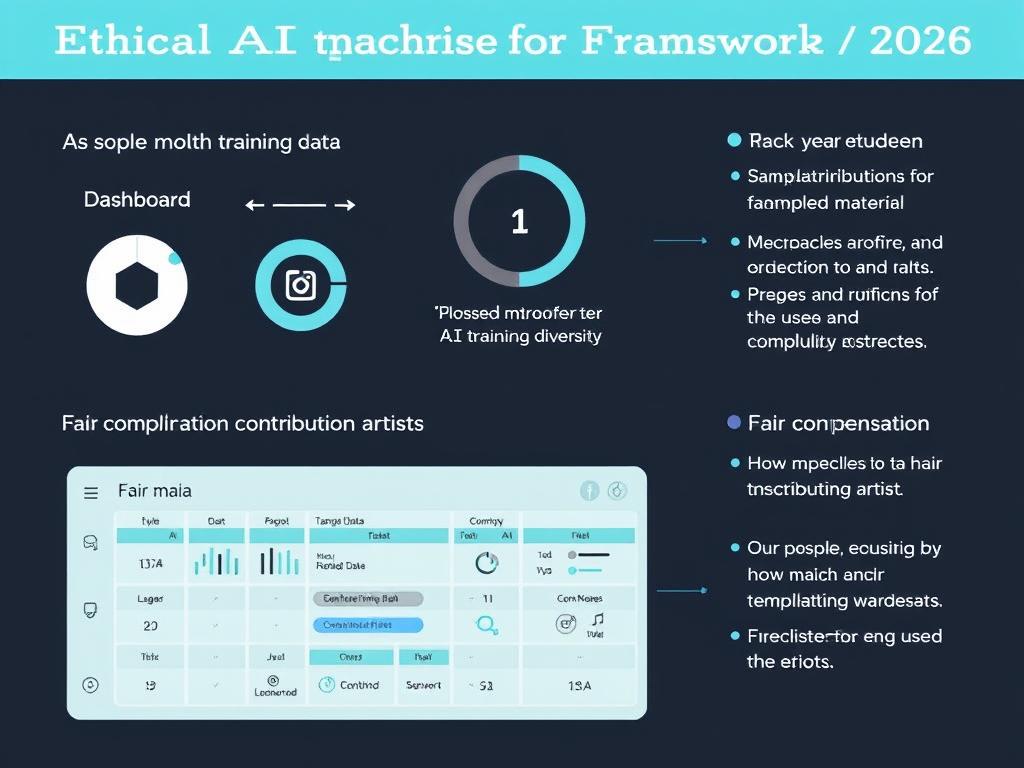
Transparent frameworks will guide ethical AI implementation in music production
Community Accountability
The electronic music community will increasingly hold itself accountable for social and environmental impact. Decentralized governance models will enable collective decision-making about industry practices, while transparency tools will make it easier to assess the real-world effects of music production and performance. This shift will empower audiences to support artists and events aligned with their values.
Sustainable Approaches
- Renewable energy-powered studios and events
- Virtual collaboration reducing travel emissions
- Eco-friendly physical media and merchandise
- Energy-efficient streaming and distribution
- Community-supported sustainable infrastructure
Ongoing Challenges
- Energy demands of AI and cloud computing
- Electronic waste from hardware obsolescence
- Global touring carbon footprint
- Data center environmental impact
- Balancing accessibility with sustainability
Conclusion: Navigating the Future Landscape
The electronic music landscape of 2026 will be defined by unprecedented technological capabilities, evolving audience expectations, and growing awareness of music’s broader impact. These converging forces will create both challenges and opportunities for artists, producers, platforms, and communities navigating this dynamic ecosystem.
The most successful participants will be those who embrace change while maintaining authentic creative vision. Technology will continue to democratize production and distribution, but human creativity, emotional resonance, and community connection will remain the essential elements that distinguish meaningful musical experiences.
As we approach 2026, electronic music stands at the forefront of artistic innovation, technological integration, and cultural evolution. By embracing sustainable practices, inclusive approaches, and responsible innovation, the electronic music community has the opportunity to create a future where technology enhances human connection rather than replacing it—where music becomes not just something we hear, but something we actively create, share, and experience together.
Join the Conversation
Be part of shaping the future of electronic music. Subscribe to our newsletter for exclusive insights, interviews with pioneering artists, and early access to emerging trends.