The intersection of artificial intelligence and music production is rapidly evolving, with AI already reshaping how we approach mixing and mastering. By 2026, these technologies will fundamentally transform workflows, creative possibilities, and the role of audio engineers. This forward-looking guide explores the coming AI revolution in music production, from algorithmic advancements to practical applications that will define the studio of tomorrow.
The Current State of AI in Music Production (2023-2024)
To understand where we’re headed, we must first establish our starting point. Today’s AI tools in music production primarily focus on assistance rather than replacement, offering intelligent suggestions while keeping humans in control of creative decisions.
AI Mixing Assistants in 2024
Current AI mixing tools analyze audio content and suggest processing parameters based on genre, reference tracks, or desired outcomes. Leading platforms like iZotope Neutron 5 identify frequency masking between instruments and recommend EQ adjustments to improve clarity. These tools accelerate workflow by providing intelligent starting points but still require human refinement.
AI Mastering Platforms Today
Mastering assistants like iZotope Ozone 12 and LANDR analyze full mixes and apply processing chains tailored to genre profiles and reference tracks. While these tools deliver remarkably polished results, they function primarily as sophisticated presets rather than truly adaptive systems that understand musical context and artistic intent.
| Current AI Feature (2023-2024) | Capability | Limitation |
| Spectral Analysis | Identifies frequency masking and suggests EQ | Limited understanding of musical context |
| Dynamic Processing | Suggests compression settings based on content | Often requires manual adjustment |
| Reference Matching | Analyzes reference tracks for tonal balance | Focuses on spectral matching over artistic intent |
| Genre-Based Processing | Applies genre-appropriate processing chains | Limited to predefined genre categories |
| Vocal Enhancement | Detects and processes vocals automatically | Basic processing without style awareness |
These current tools represent the foundation upon which the next generation of AI music production technology will build. By 2026, we’ll see dramatic advances in both capability and integration that will redefine what’s possible in audio production.
Predicted Advancements in AI Mastering Algorithms by 2026

By 2026, AI mastering algorithms will evolve from today’s assistive tools to deeply intelligent systems that understand musical context, emotional impact, and platform-specific optimization. These advancements will be driven by several key technological developments.
Context-Aware Processing
Future AI mastering systems will understand the relationship between musical elements and how they contribute to emotional impact. Rather than simply analyzing frequency content, 2026’s AI will recognize chord progressions, melodic motifs, and arrangement structures to make processing decisions that enhance the musical narrative.
“By 2026, AI mastering won’t just analyze what frequencies exist in your mix—it will understand why they matter to your song’s emotional journey and process accordingly.”
Adaptive Release Format Optimization
As streaming platforms continue to evolve, 2026’s AI mastering tools will automatically optimize masters for multiple release formats simultaneously. These systems will create platform-specific versions tailored to the unique compression algorithms, playback environments, and listener behaviors of each service—from Spotify to spatial audio platforms.
Real-Time Collaborative Mastering
Cloud-based AI mastering platforms will enable real-time collaboration between artists, producers, and AI systems. Changes made by human engineers will train the AI in real-time, creating a feedback loop that continuously improves results while preserving artistic vision.
Personalized Mastering Profiles
By 2026, AI mastering systems will develop personalized profiles for individual engineers and artists, learning their preferences and signature sounds. These systems will adapt processing to match an artist’s sonic identity while still optimizing technical aspects like loudness and clarity.
Stay Ahead of AI Mastering Developments
Join our quarterly webinar series on emerging AI audio technologies and be the first to learn about breakthrough mastering algorithms.
Emerging AI Mixing Tools and Workflow Integrations for 2026
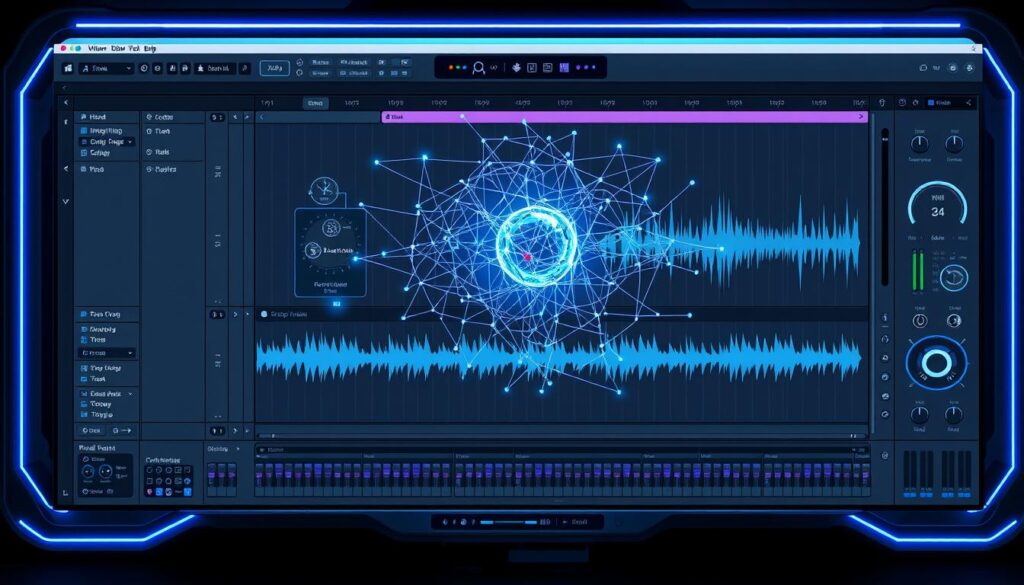
The mixing console of 2026 will bear little resemblance to today’s interfaces, with AI deeply integrated into every aspect of the workflow. These tools will not only suggest technical adjustments but will understand the creative direction of a project.
Intelligent Track Grouping and Relationship Modeling
Future AI mixing tools will automatically identify relationships between tracks and create intelligent grouping systems. These systems will understand that the kick drum, bass, and bass synth form a foundational group that should be processed with awareness of their interaction, automatically adjusting processing to maintain clarity and impact.
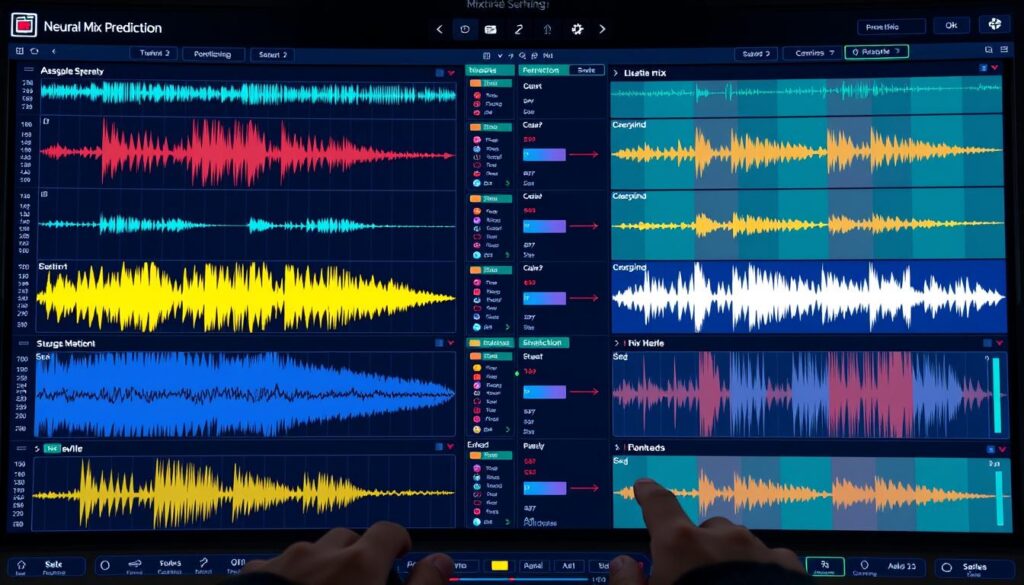
Neural Mix Prediction
By 2026, AI will be able to predict how mixing decisions will affect the final result before they’re applied. Engineers will see real-time previews of how EQ, compression, or spatial adjustments will influence not just the individual track but the entire mix, allowing for more informed creative decisions.
Cross-Adaptive Processing at Scale
While today’s tools can handle basic sidechain relationships, 2026’s AI mixing systems will manage complex cross-adaptive processing across dozens of tracks simultaneously. These systems will dynamically adjust processing based on the entire mix context, ensuring that each element has its own sonic space without requiring manual sidechaining or automation.
Current Mixing Workflow (2024)
- Manual track organization and grouping
- Individual plugin insertion and configuration
- Manual sidechaining between related tracks
- Trial-and-error approach to processing
- Limited understanding of mix interactions
AI-Enhanced Mixing Workflow (2026)
- Automatic intelligent track grouping
- Contextual processing suggestions
- Automated cross-adaptive relationships
- Predictive outcome visualization
- Holistic understanding of mix interactions
Spatial Audio Intelligence
As spatial audio continues to grow in importance, 2026’s AI mixing tools will excel at creating immersive mixes that translate across playback systems. These tools will automatically suggest optimal object placement, movement, and room modeling based on the musical content and intended emotional impact.
Key Innovation: By 2026, AI mixing systems will understand genre-specific spatial conventions and automatically suggest appropriate spatial treatments while allowing for creative experimentation beyond traditional boundaries.
How AI Will Change the Role of Audio Engineers and Producers by 2026
As AI capabilities expand, the roles of audio engineers and producers will evolve significantly. Rather than replacing human creativity, AI will elevate it by handling technical tasks and expanding creative possibilities.
From Technical Operator to Creative Director
By 2026, engineers will spend less time on technical problem-solving and more time on creative direction. AI will handle routine tasks like gain staging, basic EQ, and dynamic control, allowing engineers to focus on aesthetic decisions and emotional impact. The engineer’s value will increasingly come from artistic judgment rather than technical expertise.
Collaborative Intelligence
The relationship between engineers and AI will evolve into a collaborative partnership. Engineers will provide creative direction while AI systems offer technical implementation and alternative approaches. This collaboration will create a feedback loop where both human and machine learning continuously improve outcomes.
Benefits for Engineers
- Reduced time spent on technical troubleshooting
- Ability to explore more creative variations
- Faster iteration and experimentation
- More time for client interaction and creative direction
- Expanded capabilities beyond individual technical skills
Challenges for Engineers
- Need to develop new skills in AI direction
- Potential commoditization of basic mixing services
- Learning curve for new AI-integrated workflows
- Maintaining unique creative voice alongside AI
- Navigating client expectations about AI capabilities
Democratized Production and New Specializations
AI will continue to democratize production capabilities, allowing artists with limited technical knowledge to achieve professional-quality results. This shift will create new specializations for engineers who can leverage AI to deliver unique value, such as AI prompt engineering, system training, and signature sound development.
“The most valuable engineers in 2026 won’t be those who know the most plugin parameters—they’ll be those who can direct AI systems toward unique creative visions that algorithms alone couldn’t imagine.”
Prepare for the Changing Landscape
Download our comprehensive guide to developing the skills that will remain valuable in an AI-enhanced production environment.
Ethical Considerations and Creative Implications of AI-Assisted Mastering
As AI becomes more capable, the industry must navigate complex ethical questions about creativity, attribution, and the value of human input in the production process.
Attribution and Creative Ownership
By 2026, the question of who deserves credit for AI-assisted productions will become increasingly important. When an AI system makes significant mixing or mastering decisions, should it be credited alongside human engineers? Industry standards will likely emerge to address attribution for different levels of AI involvement.
Preserving Artistic Diversity
One risk of widespread AI adoption is the potential homogenization of sound. If many artists use similar AI systems trained on similar data, productions could converge toward common patterns. Maintaining sonic diversity will require intentional efforts to train AI on diverse datasets and encourage creative experimentation beyond AI suggestions.
Industry Response: By 2025, expect to see major DAW developers and plugin manufacturers introduce “diversity controls” that allow engineers to specify how closely AI should adhere to conventional patterns versus exploring creative alternatives.
Transparency in AI Processing
As AI processing becomes more sophisticated, transparency about how decisions are made will be crucial. Engineers and artists will need to understand the basis for AI suggestions to maintain creative control. Leading platforms will likely offer explainable AI features that clarify the reasoning behind processing recommendations.
Balancing Efficiency and Craft
The efficiency gains from AI will challenge the industry to redefine the value of production services. When AI can deliver technically proficient results in minutes, the human element of craft, taste, and artistic judgment will become even more important as differentiators.
Will AI mastering make human mastering engineers obsolete by 2026?
No, but their role will evolve significantly. While AI will handle many technical aspects of mastering, human engineers will provide creative direction, quality control, and the artistic judgment that AI cannot replicate. The most successful mastering engineers will be those who effectively collaborate with AI rather than compete against it.
How will we determine if an AI or human deserves credit for a great-sounding mix?
By 2026, we’ll likely see the emergence of standardized attribution systems that specify levels of AI involvement in production. These might range from “AI-assisted” (where humans make most decisions) to “AI-generated with human direction” (where AI handles implementation based on human creative direction). The industry will need to develop clear guidelines for different levels of human and AI contribution.
Software and Platforms Expected to Lead the AI Mixing and Mastering Market by 2026
Several key players are positioned to dominate the AI mixing and mastering landscape by 2026, with both established companies and innovative startups driving innovation.
iZotope’s Neural Audio Platform
Building on their current leadership in AI audio tools, iZotope is likely to introduce a comprehensive Neural Audio Platform by 2026. This ecosystem will integrate deeply with major DAWs and offer end-to-end AI assistance from recording through mastering, with a focus on maintaining the engineer’s creative control while automating technical processes.
Dolby’s Adaptive Audio Engine
Leveraging their expertise in audio standards and spatial sound, Dolby is positioned to release an Adaptive Audio Engine that specializes in format-specific optimization. This platform will excel at creating masters that translate perfectly across different playback systems, from earbuds to cinema, with particular strength in spatial audio applications.
Google DeepMind Audio
After their success with MusicLM and other generative audio models, Google DeepMind is likely to enter the professional audio production space with sophisticated AI tools for mixing and mastering. Their strength in deep learning will enable context-aware processing that understands musical structure and emotional intent.
Mureka’s Integrated Production Environment
Building on their current AI music creation platform, Mureka is positioned to develop a comprehensive environment that handles composition, arrangement, mixing, and mastering within a unified ecosystem. Their strength will be in maintaining consistency across the entire production process.
Open Source Alternatives
By 2026, expect to see sophisticated open-source AI mixing and mastering tools that rival commercial offerings. These platforms will benefit from collaborative development and diverse training data, offering powerful alternatives to proprietary systems.
| Platform | Predicted Strengths | Ideal Use Case | Integration Focus |
| iZotope Neural Audio | Comprehensive processing, plugin ecosystem | Professional studios, post-production | Major DAWs, cloud collaboration |
| Dolby Adaptive Audio | Format optimization, spatial audio | Film, game audio, immersive music | Post-production suites, streaming platforms |
| Google DeepMind Audio | Deep learning, context awareness | Innovative productions, genre-bending music | Cloud-based workflow, mobile production |
| Mureka Production | End-to-end consistency, composition integration | Independent artists, content creators | Self-contained ecosystem, social sharing |
| Open Source AI Audio | Customization, community development | Technical users, educational settings | Cross-platform compatibility, modular design |
Try Tomorrow’s Technology Today
Get early access to beta versions of next-generation AI mixing and mastering tools and help shape their development.
Practical Guide: How to Prepare for AI in Music Mastering and Mixing 2026
The rapid evolution of AI in audio production requires intentional preparation to stay relevant and leverage these powerful tools effectively. Here’s how musicians and producers can prepare for the AI-enhanced landscape of 2026.
Develop AI Direction Skills
The ability to effectively direct AI systems will become as important as traditional technical skills. Practice articulating your creative vision in terms that AI can understand, such as reference tracks, emotional descriptors, and specific technical parameters. Experiment with current AI tools to develop an understanding of how to guide these systems toward your desired results.
- AI prompt engineering for audio
- Critical evaluation of AI-generated results
- Understanding AI strengths and limitations
- Translating creative vision into AI parameters
- Efficient workflow integration with AI tools
Skills to Develop Now
- Online courses in AI audio production
- Beta programs for emerging AI tools
- Communities focused on AI music production
- Academic research on music AI systems
- Cross-disciplinary learning (AI + music theory)
Resources to Explore
- Over-reliance on AI suggestions
- Neglecting fundamental audio principles
- Losing creative distinctiveness
- Ignoring ethical considerations
- Resistance to workflow evolution
Potential Pitfalls
Focus on Creative Judgment
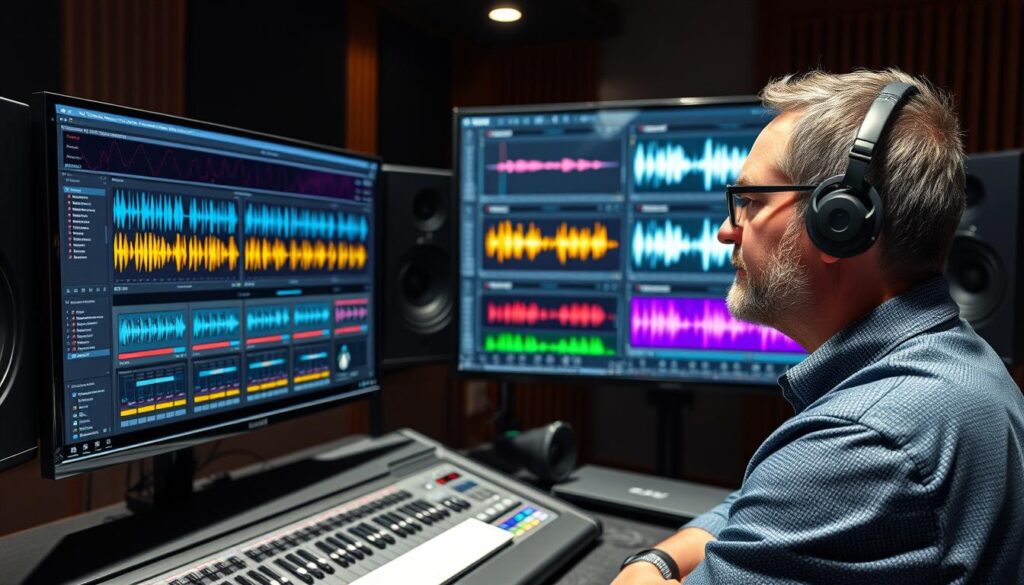
As AI handles more technical aspects of production, your creative judgment will become your most valuable asset. Develop a strong aesthetic sense by critically analyzing productions you admire, understanding why certain choices work emotionally, and refining your ability to make decisions based on artistic impact rather than technical correctness.
Embrace Hybrid Workflows
Start integrating AI tools into your current workflow now, even if they’re not yet as advanced as they’ll be in 2026. This gradual adoption will help you develop hybrid workflows that leverage both human creativity and AI capabilities. Experiment with using AI for initial processing while reserving final creative decisions for yourself.
Invest in Continuous Learning
The rapid pace of AI development means that continuous learning will be essential. Subscribe to resources that track AI audio developments, participate in communities exploring these technologies, and regularly experiment with new tools as they emerge.
Important: Don’t wait until 2026 to start adapting. The engineers and producers who will thrive in the AI era are those who begin experimenting with and mastering these tools now, developing workflows and skills that will evolve alongside the technology.
Future Workflow Scenarios: AI in Music Mastering and Mixing 2026
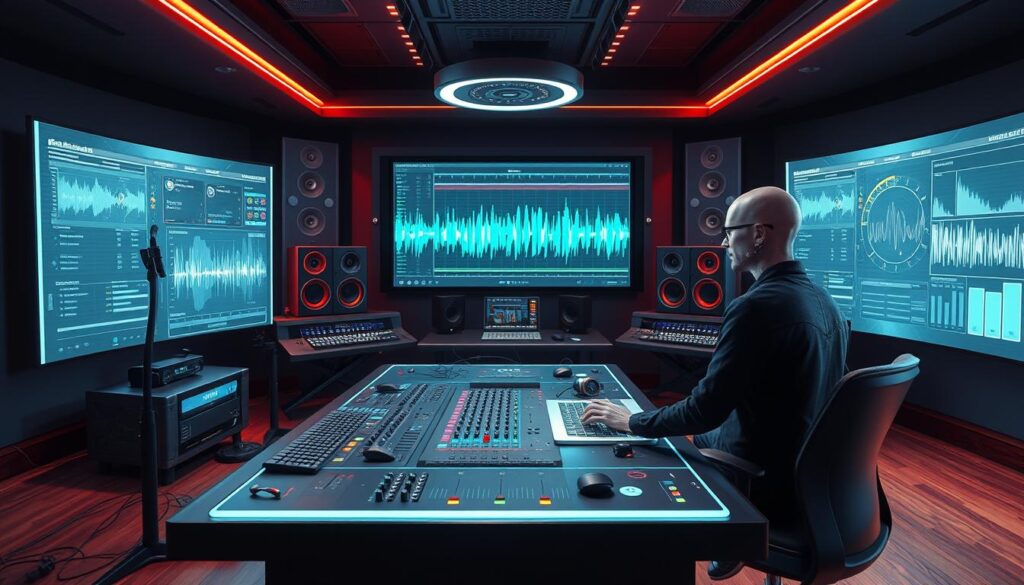
To better understand how AI will transform music production by 2026, let’s explore several realistic workflow scenarios that illustrate the practical applications of these technologies.
Scenario 1: The Independent Artist
An independent artist in 2026 records vocals and guitar in their home studio. Their AI production assistant automatically identifies the genre and suggests appropriate processing chains. As they record additional parts, the AI adjusts its approach based on the evolving arrangement. When the tracking is complete, the artist specifies a few reference tracks and emotional descriptors, and the AI creates three different mix options. The artist selects their preferred direction, makes a few adjustments to the vocal presence, and the AI finalizes the mix and creates masters optimized for streaming, vinyl, and spatial audio.
Scenario 2: The Professional Mix Engineer
A professional mix engineer in 2026 receives a session from a client with 80+ tracks. The AI assistant automatically organizes tracks into logical groups, identifies potential phase issues, and suggests basic processing chains. The engineer reviews these suggestions, approves most of them, and modifies others based on their creative vision. As they work on the mix, the AI continuously analyzes their decisions and offers complementary suggestions. When the engineer applies unusual processing to create a signature sound, the AI learns from these choices and incorporates them into future suggestions.
Scenario 3: The Mastering Studio
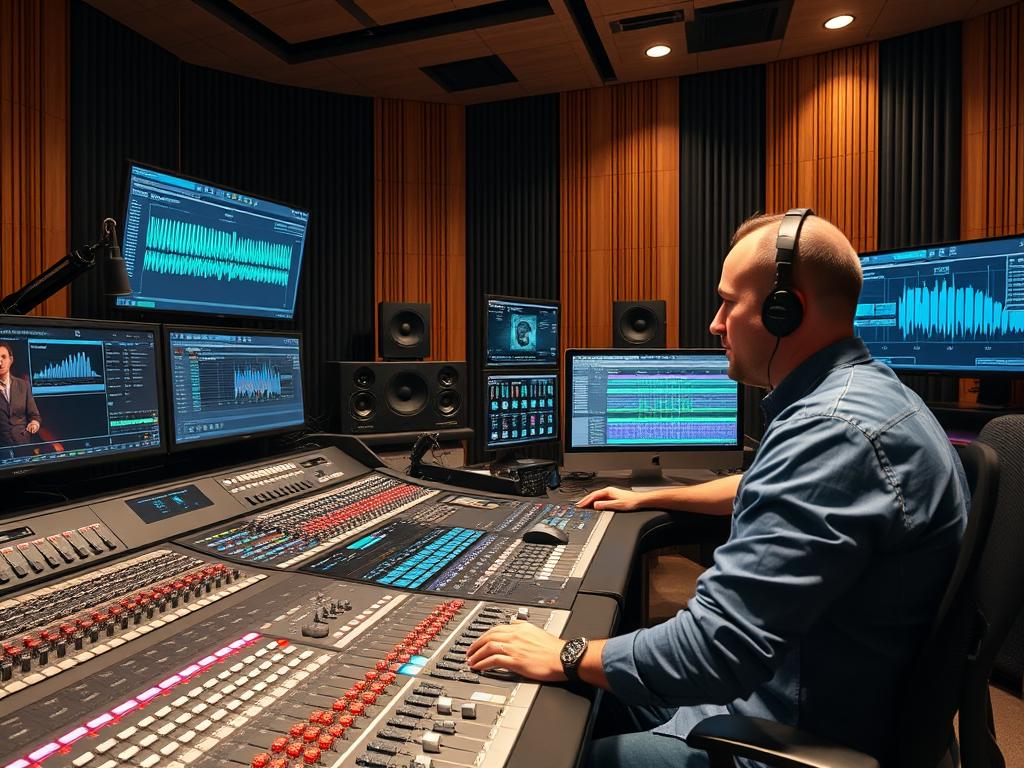
A mastering engineer in 2026 receives a mix for finalization. Their AI system analyzes the mix and identifies several potential approaches based on the genre and reference tracks. The engineer selects a direction and the AI applies initial processing. As the engineer makes refinements, the AI simultaneously creates platform-specific versions for different streaming services, adjusting dynamics and spectral balance to optimize for each platform’s compression algorithms and typical listening environments. The client can preview these different versions in real-time through a collaborative cloud interface.
“The most exciting aspect of AI in 2026 won’t be what it can do automatically—it will be how it extends human creativity into new territories that weren’t previously accessible due to technical limitations.”
Embracing the Future of AI in Music Mastering and Mixing
The evolution of AI in music mastering and mixing by 2026 represents not just a technological shift but a fundamental reimagining of the production process. These advancements will democratize high-quality production while creating new opportunities for creative expression and professional specialization.
The most successful producers and engineers of 2026 will be those who embrace AI as a collaborative partner rather than viewing it as a threat or replacement. By developing the skills to effectively direct these systems, maintaining strong creative judgment, and continuously adapting to emerging technologies, music professionals can harness AI to expand their capabilities and focus more deeply on the artistic aspects of production.
As we move toward this AI-enhanced future, the fundamental goal remains unchanged: creating emotionally impactful music that connects with listeners. AI will simply provide new and powerful tools to achieve this timeless objective.
Stay Updated on AI Music Production Developments
Subscribe to our newsletter for quarterly updates on emerging AI technologies in music production and exclusive tutorials on integrating these tools into your workflow.