
In 2026, over 150,000 songs are uploaded to streaming services daily, with independent artists driving much of this growth. For musicians navigating the digital landscape, choosing the right music distribution platform can make the difference between building a sustainable career and getting lost in the noise.
The right distributor ensures your music reaches major platforms like Spotify, Apple Music, and emerging global services while maximizing your royalties and providing valuable promotional tools. This comprehensive guide examines the top music distribution platforms for independent artists in 2026, analyzing their pricing models, feature sets, and which artists they best serve.
Why Proper Distribution Matters for Independent Artists in 2026
Distribution is the critical bridge between your music and potential listeners. In 2026’s hyper-competitive music landscape, proper distribution provides several essential benefits:
- Access to 200+ streaming platforms and digital stores worldwide
- Professional presentation alongside major label artists
- Simplified royalty collection from multiple revenue streams
- Valuable analytics to understand audience behavior
- Opportunities for playlist placement and algorithmic promotion
- Integration with emerging platforms and technologies
Without effective distribution, even exceptional music remains undiscovered. The platforms reviewed below represent the most powerful tools available to independent artists in 2026 for getting music into listeners’ hands and maximizing revenue potential.
Ready to Get Your Music Heard?
Don’t let your music go undiscovered. Start distributing with one of our top-recommended platforms today and reach millions of potential listeners worldwide.
The 7 Best Music Distribution Platforms for Independent Artists in 2026
Our comprehensive analysis examines each platform based on pricing structure, royalty rates, feature sets, user experience, and additional services. We’ve tested each platform extensively and gathered feedback from hundreds of independent artists to provide the most accurate assessment for 2026.
1. DistroKid: Best for Prolific Artists
DistroKid remains the industry leader for artists who release music frequently. Their unlimited upload model revolutionized the industry, and in 2026, they’ve enhanced their offering with advanced AI-powered promotional tools and expanded global reach.
Pros
- Unlimited uploads for one annual fee ($19.99-$79.99)
- Fast distribution (24-48 hours to major platforms)
- Automated royalty splitting for collaborators
- Advanced AI-powered promotional tools
- Integrated cover song licensing
Cons
- Additional fees for YouTube Content ID ($4.95/year per release)
- Music removed if subscription lapses (unless “Leave a Legacy” fee paid)
- Limited analytics compared to competitors
- Customer support can be slow during peak periods
DistroKid’s 2026 platform includes enhanced features like automated mastering, AI-driven marketing recommendations, and expanded global store coverage. Their HyperFollow smart links have evolved into comprehensive artist microsites that consolidate streaming, social media, and merchandising in one location.
The platform now distributes to over 200 streaming services and digital stores worldwide, including all major platforms like Spotify, Apple Music, Amazon Music, and emerging services in Asia and Africa. Their royalty collection system remains one of the fastest in the industry, with payments typically processed within 1-2 days of receipt.
Perfect for Prolific Creators
Release unlimited music with DistroKid’s streamlined platform. Ideal for artists who release multiple tracks per year.
2. TuneCore: Best for Professional Career Growth
TuneCore has evolved significantly since its 2025 subscription model overhaul. Now positioned as a comprehensive career development platform, TuneCore offers extensive educational resources, advanced analytics, and robust publishing administration services that help artists build sustainable careers.
Pros
- Tiered subscription model with unlimited releases ($14.99-$49.99/year)
- Comprehensive publishing administration
- Advanced analytics with audience insights
- Social media management tools
- Excellent customer support with industry experts
Cons
- Publishing administration costs extra ($75 setup fee)
- Music removed if subscription lapses
- Less intuitive interface for beginners
- Slower distribution times than DistroKid (2-5 days)
TuneCore’s 2026 platform emphasizes career development with enhanced educational resources, mentorship programs, and networking opportunities. Their TuneCore Accelerator Program provides selected artists with personalized growth strategies, playlist pitching, and marketing support.
The platform now includes TuneCore Social Pro, an advanced social media management system that helps artists coordinate releases across platforms, schedule content, and analyze engagement metrics. Their publishing administration service remains industry-leading, capturing often-missed royalty streams from radio, TV, and international performances.
Build a Professional Music Career
Access comprehensive career development tools and unlimited distribution with TuneCore’s professional platform.
3. CD Baby: Best for Long-Term Catalog Management
CD Baby has repositioned itself as the premier platform for artists focused on building long-term catalog value. Their one-time payment model ensures music stays online permanently, and they’ve expanded their physical distribution capabilities to include vinyl-on-demand and enhanced CD manufacturing services.
Pros
- One-time payment model ($9.99 per single, $29.99 per album)
- Music stays online permanently
- Comprehensive physical distribution options
- Sync licensing opportunities
- Beginner-friendly interface
Cons
- 9% commission on all royalties
- Higher costs for prolific artists
- Limited analytics compared to subscription services
- No automatic royalty splitting
CD Baby’s 2026 platform includes enhanced sync licensing opportunities through their partnership with major film studios and production companies. Their Show.co promotional tools have expanded to include AI-driven marketing campaigns and automated playlist pitching.
The platform has reintroduced publishing administration services through a new partnership, addressing a gap in their service offering since 2023. Their physical distribution network remains unmatched, with expanded global warehousing and fulfillment capabilities for artists selling CDs, vinyl, and merchandise.
Build Long-Term Catalog Value
Distribute once and earn forever with CD Baby’s permanent distribution model. Ideal for artists focused on building lasting catalog value.
4. iMusician: Best for Flexible Distribution Options
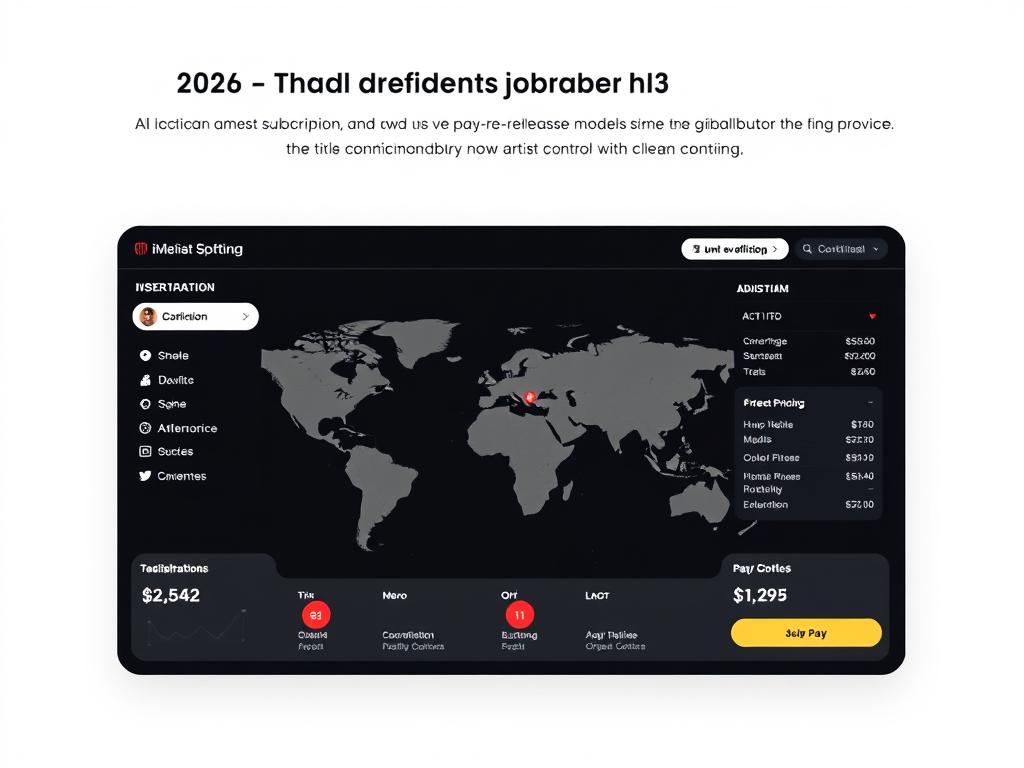
iMusician has emerged as a leading platform for artists seeking flexibility in their distribution approach. Their hybrid model offers both subscription and pay-per-release options, allowing artists to choose the structure that best fits their release strategy and budget.
Pros
- Flexible pricing models (one-time or subscription)
- “Forever Online” guarantee
- Distribution to 200+ platforms worldwide
- Excellent global reach, especially in emerging markets
- Multilingual customer support
Cons
- Limited promotional tools compared to competitors
- No integrated publishing administration
- Less name recognition in North America
- Fewer artist resources and educational materials
iMusician’s 2026 platform emphasizes transparency and artist control with clear pricing and no hidden fees. Their “Forever Online” guarantee ensures music remains available on streaming platforms regardless of future subscription status, providing peace of mind for artists concerned about catalog longevity.
The platform excels in global distribution, with particularly strong coverage in emerging markets across Asia, Africa, and South America. Their localized support in multiple languages makes them an excellent choice for artists targeting international audiences beyond English-speaking markets.
Distribution Your Way
Choose the distribution model that works for you with iMusician’s flexible options. Keep your music online forever with their lifetime guarantee.
5. Amuse: Best for Mobile-First Artists
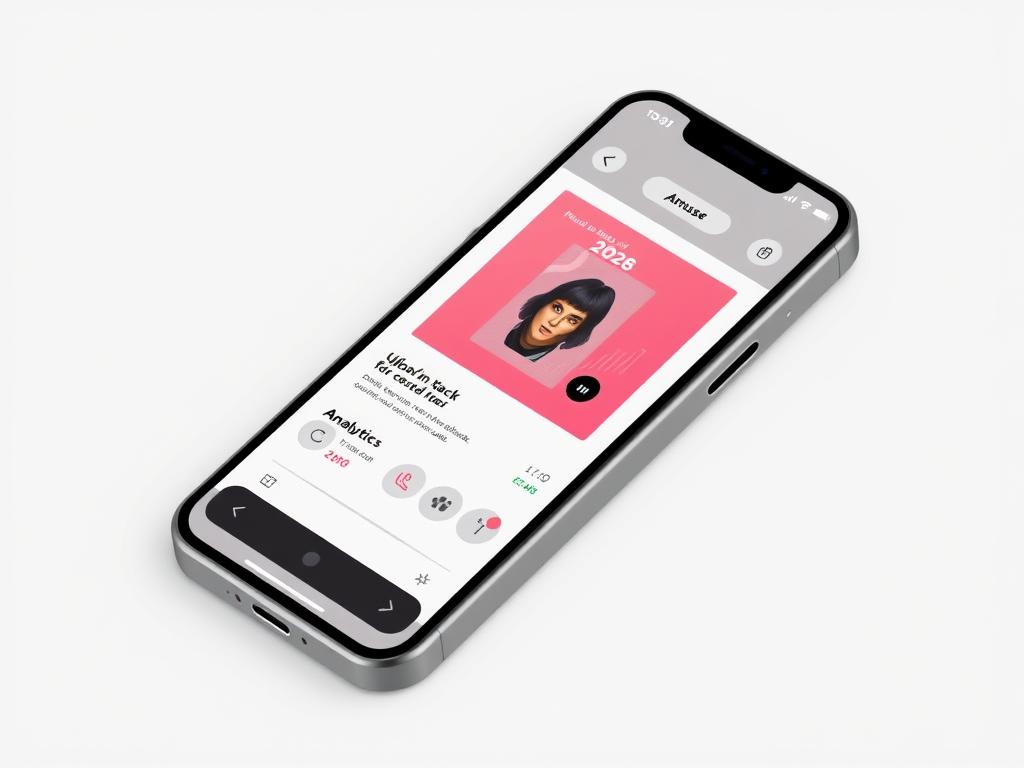
Amuse has perfected the mobile-first approach to music distribution, allowing artists to manage their entire catalog from smartphones and tablets. Their streamlined interface and AI-powered release optimization make them ideal for artists who create and distribute on the go.
Pros
- Excellent mobile app experience
- Free tier available for basic distribution
- Fast-track program for promising artists
- Simple, intuitive interface
- AI-powered release optimization
Cons
- Limited distribution network compared to competitors
- 25% commission if subscription lapses
- Fewer promotional tools
- Limited customer support options
Amuse’s 2026 platform has expanded its AI capabilities to include predictive analytics that forecast track performance and suggest optimal release strategies. Their Fast Forward program provides advances against future royalties for artists showing promising growth metrics.
The platform’s simplified approach makes it particularly appealing to new artists and those who prioritize convenience over advanced features. Their free tier remains one of the few no-upfront-cost options in the industry, though it comes with limited features and longer distribution times.
Distribute Music From Anywhere
Manage your music career from your smartphone with Amuse’s mobile-first platform. Perfect for artists who create on the go.
6. LANDR: Best All-in-One Creative Platform
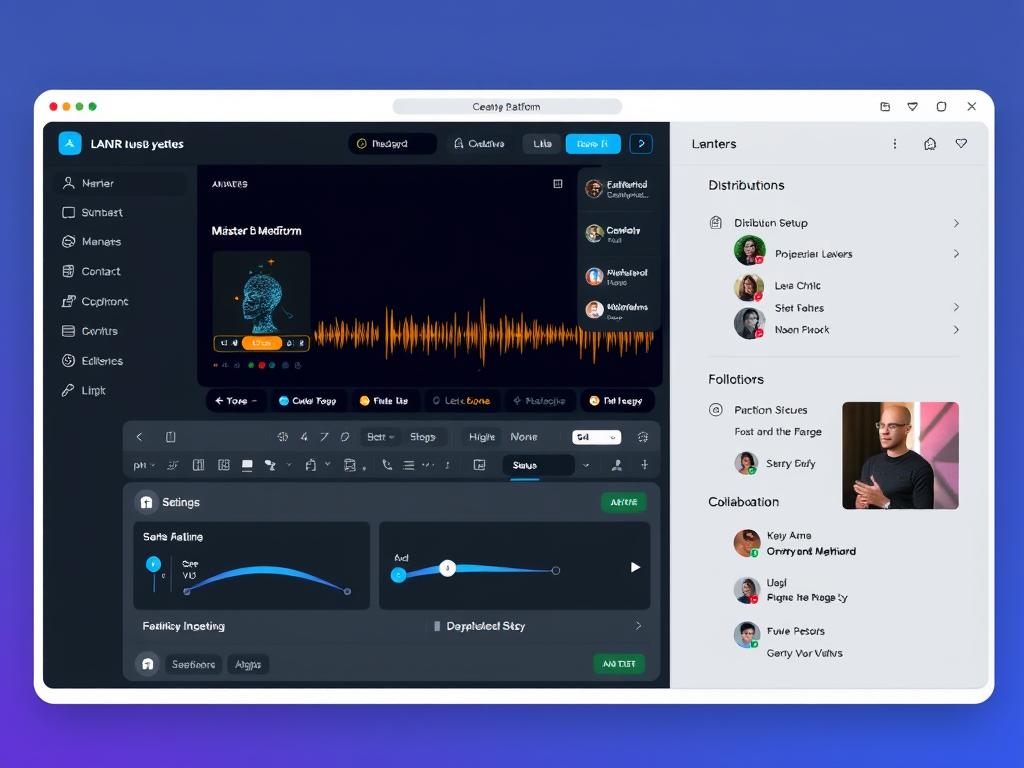
LANDR has evolved from a mastering service into a comprehensive creative platform that integrates production tools, collaboration features, and distribution services. Their all-in-one approach streamlines the journey from creation to release, making them ideal for artists who value workflow integration.
Pros
- Integrated mastering, samples, and distribution
- Collaborative workflow tools
- AI-powered mastering technology
- Sample library access included
- Seamless creation-to-distribution pipeline
Cons
- Higher overall cost for full feature access
- 15% commission if subscription lapses
- Less specialized distribution features
- Limited promotional tools
LANDR’s 2026 platform emphasizes creative workflow integration with enhanced collaboration tools that allow multiple artists to work on projects simultaneously. Their AI mastering technology has advanced significantly, now offering genre-specific algorithms and reference track matching.
The platform’s distribution service has expanded to include more stores and promotional tools, though it remains less comprehensive than dedicated distributors. The value proposition centers on convenience and integration rather than specialized distribution features.
Create, Master, and Distribute in One Place
Streamline your workflow with LANDR’s integrated platform. Perfect for artists who want to simplify their production and distribution process.
7. Ditto Music: Best for Artist Development
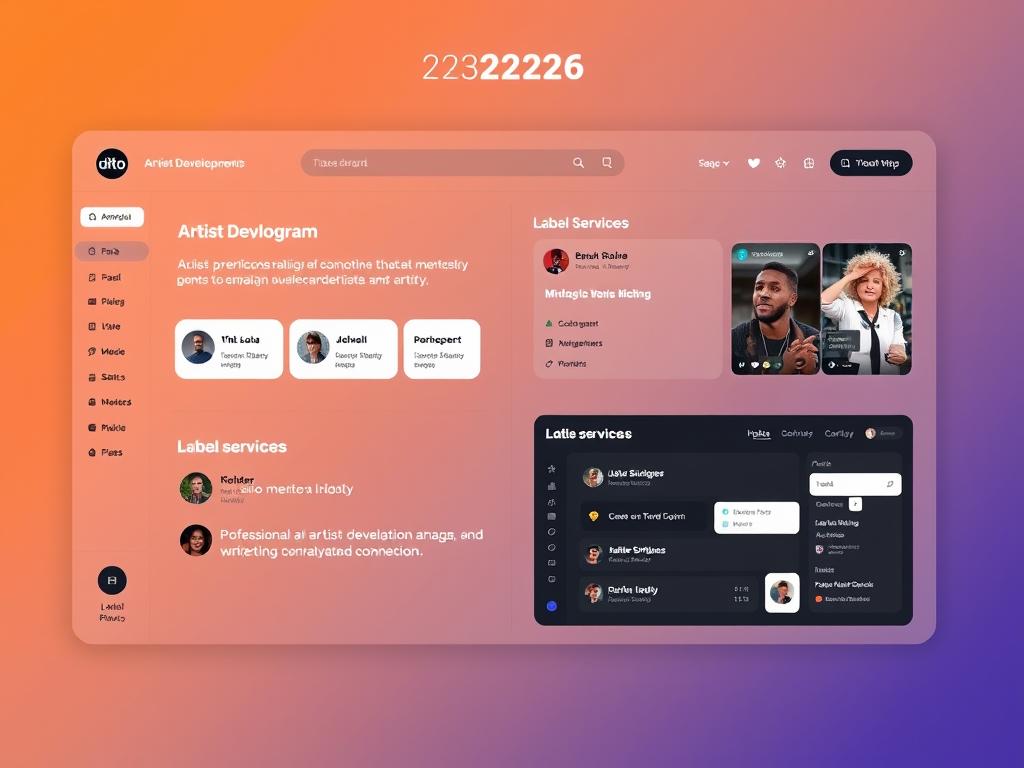
Ditto Music has positioned itself as a development-focused distributor that bridges the gap between self-release and label services. Their tiered approach allows artists to access increasingly comprehensive support as their careers grow, from basic distribution to full label services.
Pros
- Tiered services from basic distribution to label support
- Artist development programs and mentorship
- Marketing and PR services available
- Record label in a box service
- Strong industry connections
Cons
- Higher costs for premium services
- Less automated than competitors
- Application required for higher-tier services
- Less intuitive interface
Ditto’s 2026 platform includes enhanced artist development programs with industry mentorship, targeted playlist pitching, and marketing support. Their Bluebox blockchain technology has expanded to provide transparent royalty tracking and enhanced copyright protection.
The platform’s label services division offers emerging artists access to resources typically reserved for signed acts, including radio promotion, PR campaigns, and tour support. Their Record Label in a Box service has evolved to include AI-powered artist matching and catalog management tools.
Grow Your Music Career
Access professional development resources and industry connections with Ditto’s artist-focused platform.
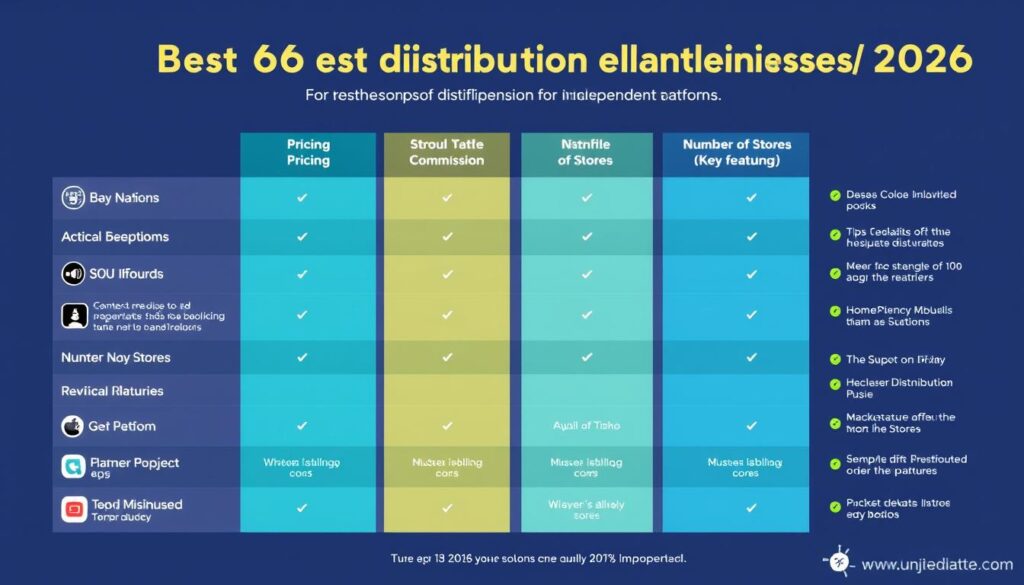
Comparison Table: Key Features and Pricing
| Platform | Pricing Model | Commission | Stores | Unique Features | Best For |
| DistroKid | $19.99-$79.99/year | 0% | 200+ | Unlimited uploads, fast distribution, splits | Prolific artists |
| TuneCore | $14.99-$49.99/year | 0% | 150+ | Publishing admin, career development | Professional growth |
| CD Baby | $9.99/single, $29.99/album | 9% | 100+ | Physical distribution, sync licensing | Catalog management |
| iMusician | One-time or $19.99-$39.99/year | 0% (subscription), 15% (one-time) | 200+ | Forever online guarantee, flexible pricing | Flexible distribution |
| Amuse | Free-$59.99/year | 0% (paid), 15% (free) | 80+ | Mobile-first, royalty advances | Mobile-first artists |
| LANDR | $20-$39/month | 0% (active), 15% (lapsed) | 150+ | Integrated mastering, samples, collaboration | All-in-one creation |
| Ditto Music | $19-$99/year | 0% | 180+ | Artist development, label services | Career development |
Find Your Perfect Distribution Partner
Ready to get your music on streaming platforms? Choose the distribution service that best matches your career goals and release strategy.
Factors to Consider When Choosing a Music Distributor in 2026

Selecting the right distribution partner requires careful consideration of several key factors. Here’s what to evaluate when making your decision:
Pricing Structure
Consider your release frequency and long-term costs. Subscription models favor prolific artists, while pay-per-release may be more economical for occasional releases. Calculate the total cost including any commissions over a 3-5 year period.
Distribution Reach
Verify coverage of essential platforms like Spotify, Apple Music, and Amazon Music, but also consider emerging markets and specialty stores relevant to your genre. Some distributors excel in specific regions or genre-focused platforms.
Royalty Retention
Compare commission rates and payment thresholds. Some platforms take 0% but charge higher upfront fees, while others take a percentage but offer lower initial costs. Consider how this impacts your projected earnings.
Additional Services
Evaluate the value of extras like publishing administration, promotional tools, and analytics. These features can significantly impact your career growth but may come with additional costs or higher tier requirements.
User Experience
Consider the platform’s interface and workflow. Mobile-first artists may prioritize app functionality, while those managing large catalogs might need robust desktop tools and batch processing capabilities.
Customer Support
Research response times and support quality. When issues arise with releases or royalties, responsive human support can be invaluable. Some platforms offer priority support for higher-tier subscribers.
“The right distributor isn’t just about getting your music online—it’s about finding a partner that aligns with your career goals, release strategy, and long-term vision for your music.”
Emerging Trends in Music Distribution for 2026
The music distribution landscape continues to evolve rapidly. Here are the key trends reshaping the industry in 2026:
AI-Powered Career Development
Distribution platforms are increasingly integrating artificial intelligence to provide personalized career guidance, release optimization, and marketing strategies. These tools analyze vast datasets to predict performance, recommend optimal release timing, and identify potential audience segments.
Blockchain Royalty Tracking
Blockchain technology is revolutionizing royalty collection and payment transparency. Several platforms now offer immutable tracking of streams and royalties, ensuring artists receive accurate payments and can trace every penny earned across multiple platforms and territories.
Spatial Audio Distribution
As spatial audio becomes standard across streaming platforms, distributors are adding tools to help independent artists create, master, and distribute immersive audio experiences. This technology allows artists to create three-dimensional soundscapes that enhance listener engagement.
Direct-to-Fan Integration
Distribution platforms are expanding beyond traditional streaming to include direct-to-fan sales channels, subscription models, and exclusive content delivery. These tools help artists build sustainable income streams outside the streaming economy.
Virtual Reality Performance Distribution
As virtual reality concerts and experiences gain popularity, distributors are adding capabilities to help artists create, promote, and monetize virtual performances. This emerging revenue stream offers new ways to connect with global audiences without traditional touring costs.
Predictive Analytics
Advanced data analysis tools now help artists forecast streaming performance, identify potential viral tracks, and optimize release strategies. These predictive models use machine learning to analyze patterns across millions of tracks and provide actionable insights.
Looking Ahead: The most successful independent artists in 2026 will leverage these emerging technologies and distribution trends to build direct relationships with fans, diversify revenue streams, and maintain ownership of their creative work.
Step-by-Step Guide for Uploading and Distributing Your Music
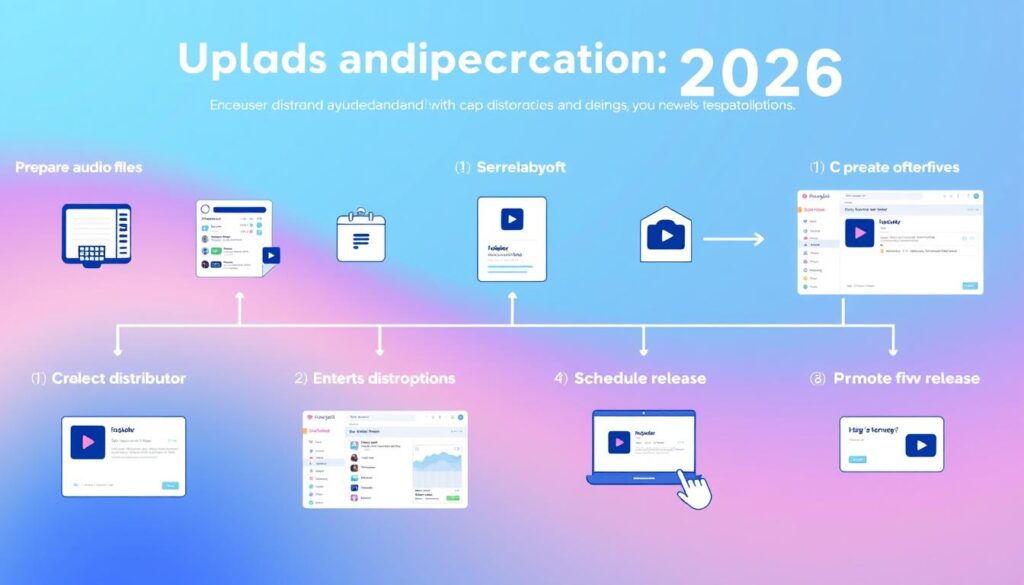
Follow this comprehensive guide to ensure a smooth distribution process, regardless of which platform you choose:
-
Prepare Your Audio Files
Ensure your tracks are mastered to industry standards (typically 16-bit, 44.1kHz WAV files). Most platforms now accept higher resolution files, but verify specifications before uploading. Consider using AI mastering tools if professional mastering isn’t in your budget.
-
Create Professional Artwork
Design or commission cover art at a minimum of 3000×3000 pixels. Ensure your artwork complies with platform guidelines (no explicit content, third-party logos, or copyright infringement). Many platforms now offer AI-assisted artwork generation tools.
-
Prepare Your Metadata
Compile accurate information including track titles, featured artists, songwriter credits, and genre classifications. Consider using specialized metadata tools to ensure consistency across platforms and maximize discoverability.
-
Select Your Distribution Options
Choose your target stores and platforms. Consider territory-specific releases for localized marketing campaigns. Most distributors now offer store-specific optimization tools to maximize visibility on each platform.
-
Schedule Your Release
Plan your release date at least 3-4 weeks in advance to allow for distribution processing and pre-save campaigns. Many platforms now offer AI-powered release date optimization based on your genre and audience demographics.
-
Set Up Pre-Save Campaigns
Utilize platform tools to create pre-save links and landing pages. These allow fans to save your music before release, boosting day-one performance metrics and algorithmic visibility.
-
Submit for Playlist Consideration
Use your distributor’s playlist pitching tools to submit tracks to platform editors and playlist curators. Provide compelling artist stories and track information to increase your chances of placement.
-
Monitor Analytics and Adjust Strategy
After release, track performance across platforms and adjust your promotional strategy based on data insights. Most distributors now offer real-time analytics and recommendation engines to guide post-release marketing.
Pro Tip: Most distribution platforms now offer automated quality checks that identify potential issues before submission. Take advantage of these tools to ensure your release meets all technical requirements and avoids delays.
Tips for Maximizing Success with Digital Distribution
Beyond simply uploading your music, these strategies will help you maximize visibility, engagement, and revenue:
Release Consistently
Streaming algorithms favor artists who release music regularly. Consider a strategy of single releases leading up to EP or album drops to maintain consistent visibility and engagement. Many successful independent artists in 2026 release new content every 4-6 weeks.
Leverage Pre-Save Campaigns
Build anticipation and day-one performance with strategic pre-save campaigns. Most distribution platforms now offer integrated tools to create customized pre-save pages and track conversion metrics.
Optimize for Algorithmic Playlists
Study platform algorithms and tailor your release strategy accordingly. Factors like save rates, completion rates, and listener engagement significantly impact algorithmic playlist placement. Many distributors now offer AI tools that help optimize these metrics.
Create Platform-Specific Content
Develop unique content for each major platform—Canvas videos for Spotify, Spatial Audio for Apple Music, or short clips for TikTok integration. Platform-specific optimization increases engagement and visibility within each ecosystem.
Build Direct Fan Relationships
Use distribution as a gateway to direct fan connections. Integrate your releases with email collection, social media engagement, and exclusive content offers to build a platform-independent audience.
Understand Your Analytics
Regularly review performance data across platforms to identify trends, successful strategies, and growth opportunities. Modern distribution platforms offer increasingly sophisticated analytics that can guide your marketing decisions.
Coordinate Cross-Platform Promotion
Synchronize your release promotion across streaming, social media, and direct channels. Integrated campaigns that drive traffic between platforms typically outperform isolated promotional efforts.
Explore Emerging Revenue Streams
Beyond traditional streaming, investigate sync licensing, spatial audio, virtual performances, and direct-to-fan subscription models. The most successful independent artists in 2026 maintain diverse revenue portfolios.
Important: Always maintain backup copies of your master files, artwork, and metadata. While distribution platforms store your content, having local backups ensures you maintain control of your catalog regardless of platform changes.
Ready to Launch Your Music?
Apply these strategies with your chosen distribution platform to maximize your music’s reach and impact in 2026.
Conclusion: Choosing the Right Platform for Your Music Career

The best music distribution platform for your career depends on your specific needs, goals, and release strategy. Here are our recommendations based on different artist profiles:
- Consider starting with Amuse (free tier) to test the waters
- Upgrade to DistroKid once you establish a regular release schedule
- Focus on platforms with intuitive interfaces and educational resources
- Prioritize services with strong playlist pitching tools
- Look for platforms with minimal upfront investment
For New Artists
- DistroKid offers the best value for frequent releases
- TuneCore provides excellent career development tools
- Prioritize unlimited upload plans with 0% commission
- Look for robust analytics and performance tracking
- Consider platforms with automated workflow features
For Prolific Creators
- TuneCore or Ditto offer comprehensive career support
- Prioritize publishing administration and royalty collection
- Look for platforms with industry connections and promotion
- Consider services with mentorship and development programs
- Invest in platforms with advanced marketing tools
For Career-Focused Artists
The music distribution landscape will continue to evolve as technology advances and listener habits change. The most successful independent artists will adapt their distribution strategies accordingly, leveraging new tools and platforms as they emerge while maintaining direct relationships with their audiences.
Remember that distribution is just one component of a successful music career. The quality of your music, your marketing strategy, and your audience engagement are equally important factors in building sustainable success as an independent artist in 2026.
Start Your Distribution Journey Today
Choose the platform that best aligns with your career goals and release strategy. The sooner you start, the faster you’ll build momentum in the digital music ecosystem.
How long does it take for music to appear on streaming platforms?
In 2026, most major distributors deliver music to streaming platforms within 1-5 business days after submission. However, the actual appearance on platforms can vary. Spotify, Apple Music, and Amazon Music typically add new releases within 24-48 hours of receiving them, while smaller platforms may take 3-7 days. For optimal results, schedule releases at least 3-4 weeks in advance to allow for potential delays and to set up pre-save campaigns.
Can I switch distribution platforms if I’m unhappy with my current one?
Yes, you can switch distributors, but the process requires careful planning. Most platforms allow you to transfer your catalog, but you’ll need to ensure your current releases are taken down before redistributing through a new service to avoid duplicates. Some distributors offer catalog transfer services that handle this process for you. Before switching, check if your current distributor charges takedown fees or if there are any contractual obligations that might affect the transfer.
How do royalty payments work with these distribution platforms?
Distribution platforms collect royalties from streaming services and digital stores, then pass them to artists based on their payment schedule and commission structure. Most platforms in 2026 offer monthly payments once you reach the minimum threshold (typically $5-$50). Platforms with 0% commission pass along the full amount received from services, while those charging commission (like CD Baby’s 9%) deduct their percentage before payment. Many distributors now offer real-time royalty tracking and predictive earnings forecasts to help artists manage their finances more effectively.